


A hacker-turned-defender warns that most of the industry is asleep on crypto’s existential threat: quantum computing.
David Carvalho, CEO of post-quantum infrastructure firm Naoris Protocol, began hacking at the age of 13, experimenting with spam emails to attract job offers and gain attention from employers.
Eventually, that curiosity shifted into formal cybersecurity work, where he used the same skills to defend systems instead of probing them. Today, he builds quantum-resilient systems for decentralized networks and claims that the cryptographic foundations of blockchains like Bitcoin and Ethereum are dangerously outdated.
“The cryptography behind nearly every chain is as weak as the rest of the world’s cryptography,” Carvalho told Cointelegraph. “Quantum is coming for it all, like meteors came for the dinosaurs.”
Though Bitcoin and other blockchain developers often claim there’s still plenty of time to adapt, the window may be closing fast. Efforts to implement quantum-resistant signatures are underway, but Carvalho said they’re far from widespread or treated with the urgency the threat demands.
The quantum threats harvesting Bitcoin data today
For years, the idea that quantum computers could threaten Bitcoin felt like science fiction. But real-world developments suggest the threat is shifting from theory to early practice.
Governments and tech giants are already preparing for what’s known as the “harvest now, decrypt later” model. US federal agencies, such as the National Institute of Standards and Technology, have warned since 2022 about the urgency of adopting quantum-resistant algorithms, while a White House memorandum prompted the NSA to advise government contractors to migrate to post-quantum cryptography by 2035.
Related: Controversial Bitcoin upgrade BIP-119 may be decided by end of year
Today’s quantum technology still falls short of cracking Bitcoin’s SHA-256 hash function or the Elliptic Curve Digital Signature Algorithm (ECDSA) that secures crypto keys. But researchers like Carvalho argue that exponential breakthroughs — especially when paired with AI — could arrive abruptly. State-sponsored actors and cybercriminal groups are already collecting encrypted blockchain data now, hoping to decrypt it once quantum hardware catches up.
“The adversaries collecting encrypted blockchain data right now aren’t waiting to attack today,” Carvalho said. “They’re building data sets for tomorrow. When the tech catches up, they’ll unlock a decade of secrets in minutes.”
Despite these warnings, most of the Bitcoin community doesn’t see quantum computing as an immediate threat, and there’s no widespread sense of panic.
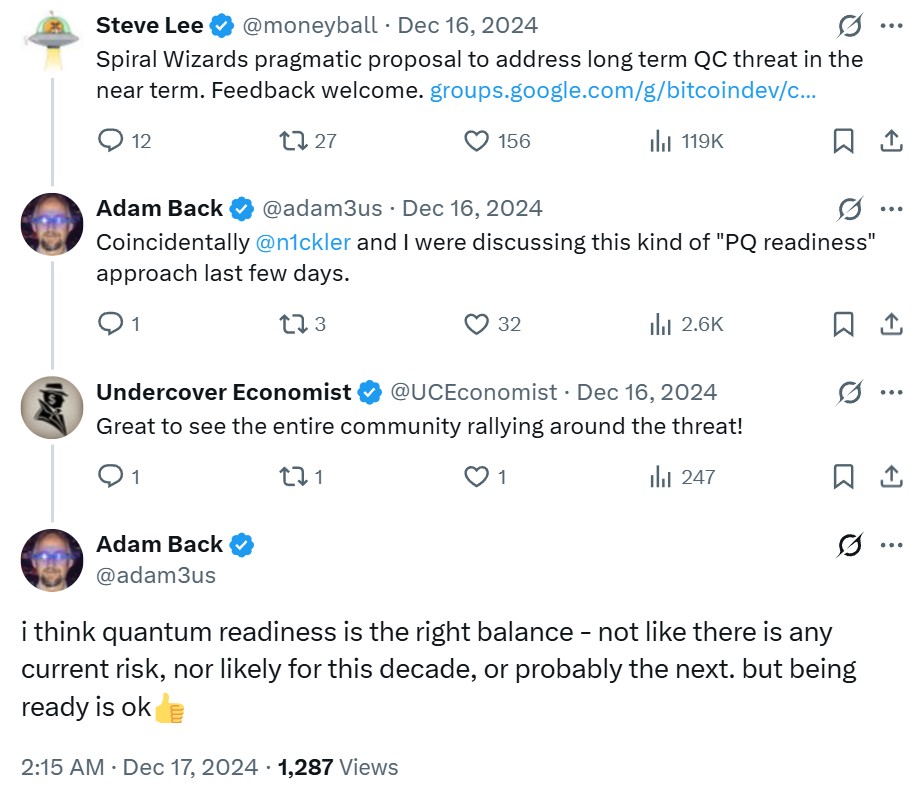
Bitcoin’s current cryptography is still considered robust against existing quantum machines, and developers have begun exploring defenses like BIP-360, which proposes quantum-resistant addresses. Projects like Carvalho’s Naoris Protocol are also working to help blockchains transition to post-quantum cryptographic standards.
Quantum laced with AI is Bitcoin’s real apocalypse
While most conversations about quantum threats focus on brute-force attacks on cryptographic keys, Carvalho believes the true danger lies in the convergence of quantum computing and artificial intelligence. Together, he argues, they could enable stealthy, asymmetric attacks that don’t overwhelm crypto systems with power but dismantle them with precision.
“Everyone’s waiting for a countdown that won’t come. You won’t get a warning that a 10-year-old Bitcoin wallet has been cracked. You’ll just see funds moved, and no one will be able to prove how or by whom,” he said.
Related: Bitcoin miners gambled on AI last year, and it paid off
AI is already embedded in cybersecurity — used for intrusion detection, smart contract auditing and anomaly detection. But in the wrong hands, the same tools could be flipped. An AI attacker could automatically scan open-source wallets for edge-case bugs, simulate validator responses and adapt in real time to network behavior. If paired with a quantum computer capable of breaking elliptic-curve private keys, the result wouldn’t be a loud breach, but what Carvalho calls a “silent collapse.”
“This isn’t just about stealing coins,” he said. “It’s about eroding trust invisibly. Entire blockchains could be compromised, governance systems spoofed, and no one would know who did it or how.”
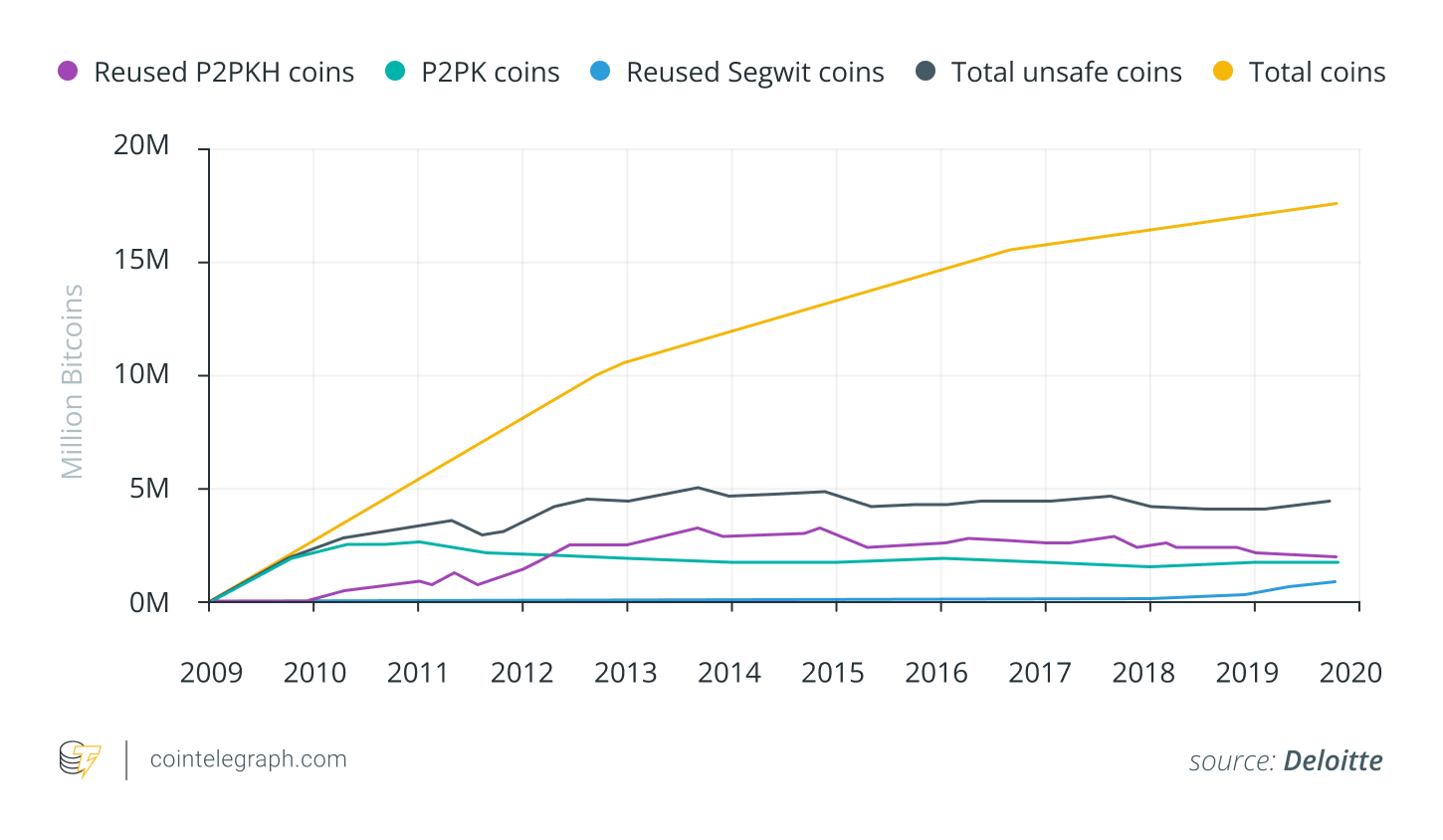
AI-driven tests have found vulnerabilities in cryptographic libraries that traditional tools overlook. Combine that with adversaries stockpiling encrypted data under the “harvest now, decrypt later” model, and the groundwork for a systemic breach may already be in place.
Carvalho warned that this could mark Bitcoin’s true apocalypse if left unaddressed — not a dramatic livestreamed cracking of SHA-256 but a slow, silent erosion of the trust layers that hold the system together.
Bitcoin can’t defend against weak links
For all the talk of Bitcoin’s decentralization, its real-world infrastructure remains deeply centralized. Cloud platforms, mining pools and validator networks all present vulnerable chokepoints that quantum-capable adversaries could exploit. If a single cloud provider hosting hundreds of full nodes is compromised, the damage could ripple across the entire network, regardless of how decentralized the protocol itself claims to be.
“Decentralization is great on paper, but if everyone’s routing through the same few backbones or trusting a handful of third-party APIs, the game’s already lost.”
The quantum threat could exploit the blind spots in the systems around it: centralized infrastructure, aging technology and trust assumptions.
Some projects are already being prepared. Carvalho’s Naoris, for example, draws on national security frameworks to build decentralized systems designed for a post-quantum world. Others are developing quantum-resistant rollups, new key formats and protocol upgrades through Bitcoin Improvement Proposals (BIPs) or leveraging inherently secure technologies like StarkWare’s STARKs.
The threat is approaching, but the response is also growing. What remains is whether the crypto ecosystem will act before it’s too late.
Magazine: Bitcoin OG Willy Woo has sold most of his Bitcoin — Here’s why