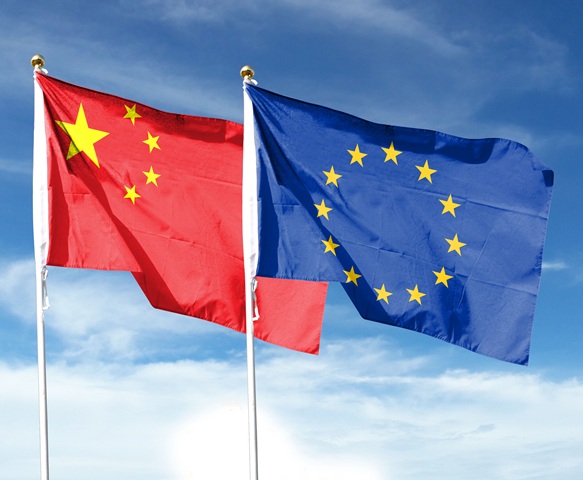

China’s rise is undermining major sectors of European industry. However, as the German economy illustrates most clearly, Europe is shifting, driven by investment cycles in defence, electrification and artificial intelligence. It is redirecting its exports and managing to maintain strong positions, particularly in high value-added services, where exports to China are trending upwards. Yet this repositioning remains fragile and could be hampered by the economic costs of the conflict in the Middle East. To consolidate its positions, Europe must accelerate the unification of its internal market and do more to strengthen its industrial policy. This is the aim of the ‘One Europe, One Market’ agenda.
Germany is once again becoming a driving force
The German economy is gradually moving away from its traditional model. Historically reliant on the automotive and chemical industries – two sectors facing particularly fierce competition from China – it is now shifting its focus towards defence, aerospace, and electronic and electrical equipment. This is confirmed by the figures for new industrial orders (see Chart 1). Now the second-largest contributor to NATO’s budget, Germany is thereby embarking on a historic shift that is already bearing fruit.
In addition, by significantly increasing its defence spending – and despite sourcing some of its supplies from outside Europe – Germany will provide additional opportunities for the European industrial base. However, this effort is not an isolated one within the European Union (see our analysis), as, in 2025, Denmark, Sweden, the Netherlands and Spain collectively committed to a greater increase in their defence budgets than Germany’s additional expenditure. The EUR 150 billion SAFE[1] fund, intended to finance the European rearmament effort, will generate an additional increase in demand that will benefit European defence manufacturers, particularly in EU countries that are accelerating their military build-up, especially in Eastern Europe (most notably, Poland and Romania). This will encourage the development of new technological niches in which China is not yet able to compete, even though Beijing is investing heavily in the defence sector.
German Mittelstand companies are capitalising on defence, electrification and AI investment cycles through inputs into sectors such as electronics and IT, and electrical equipment (see Charts 1c and 1d). This is underlined by the sustained rise in new orders for communications equipment (+30% since January 2025[2]), electronic parts (+11%) and precision optical instruments (+30%). These two sectors account for 15% of German industrial production[3] (ahead of machine tools and the automotive sector, at 12% each). Orders for ‘other transport equipment’ (accounting for 5.8%) – driven mainly by the aerospace sector – are also seeing an unprecedented rise in volumes. This rebounding demand is still hampered by production constraints. However, it points to a recovery in industrial activity.
There are still significant short-term risks, as the energy crisis caused by the conflict in the Middle East could hit the German automotive and chemicals sectors even harder. Despite this, German growth is expected to strengthen to 0.8% in 2026, and then 1.1% in 2027. By diversifying its industrial base, Germany is building up a capacity for recovery that should not be underestimated.
How should Europe position itself against China?
The balance of power remains structurally unfavourable. The EU’s trade deficit with China widened further in 2025 (EUR 360 billion). The balance has swung into the red for the automotive sector, which is a turning point. In addition, Europe’s dependence on Chinese imports shows no sign of abating. China’s share of total EU imports even increased in 2025. The country remains essential for Europe’s supply of critical materials and vital equipment for the green transition (see our analysis).
Nevertheless, Europe retains competitive advantages in the aerospace and pharmaceutical sector[4] and a range of cutting-edge industrial equipment on which China’s energy transition and industrial development still depend, most notably semiconductors[5].
Furthermore, in the services sector, the balance of power still favours Europe. In recent years, Europe had been recording a growing surplus in high value-added services – intellectual property, IT/telecommunications services and finance (see Chart 2). That said, these service exports stagnated in 2025. This decline is partly due to unfavourable exchange rate effects, as the depreciation of the renminbi, by around 8% against the euro in 2025, has eroded the competitiveness of European exporters across all markets (goods, services and third markets).

However, China’s 15th Five-Year Plan targets these sectors (see our analysis) and China’s efforts in research and development continue to grow. According to the OECD, in 2024, R&D expenditures exceeded America’s in terms of volume[6] to reach 2.7% of GDP (see Chart 3), compared with 2.1% for the EU-27 (Germany spent more on R&D, at 3.1% of GDP).

Furthermore, US protectionism has redirected some Chinese exports towards Europe, exacerbating the pressure on sectors that have already been weakened by Chinese overcapacity. This nevertheless provides Europe with leverage in negotiations, as it is a key export market for Beijing’s high value-added products, as well as a location for its companies to set up operations. In addition, enhanced partnerships between Chinese and European car manufacturers on European soil reflects a certain pragmatism. This is because Europe has unused production capacity, and China wants to establish a presence in Europe to better secure its third-party markets.
While a recalibration of competition rules is needed in relation to China, the challenge for Europe is not to engage in a tariff war that would backfire on its own exporters and drive up the cost of its imports of critical inputs. The challenge is to accelerate the transformation of its industrial base. For this purpose, Europe can rely on new growth hubs, as Spain, Portugal and some Central European economies are currently benefiting from lower production costs. It can draw on a lower-carbon electricity mix (renewables and nuclear accounted for 71% of electricity generation in 2025). The challenge now is to harness these assets in a coherent and structured manner.
The diverging interests among Member States is a structural obstacle, but the current economic and security climate allows for significant progress. As a result, a structured response from Brussels is beginning to take shape, centred on two complementary pillars: protection and diversification. The latest development is the provisional agreement on the Critical Medicine Act, reached on 12 May, that is intended to help to reduce Europe’s dependence on Asian suppliers for a list of essential medicines. Rules on supply diversification could soon be extended to sectors most exposed to Chinese overcapacity[7]. Another step forward, though still under negotiation, is the Industrial Accelerator Act, which would open access to Chinese FDI, under stricter conditions, to sectors where upscaling in Europe is needed. This would be a realistic and mutually beneficial option for the EU and China. On the other hand, safeguard measures in strategic industrial sectors where Chinese overcapacity is at its largest (chemicals, automotive and steel) justify explicit and coordinated public European support.
With this in mind, the recommendations of the Draghi and Letta reports aiming to strengthen the European internal market remain more relevant than ever. The economies of scale enabled by a strengthened internal market and European harmonisation policies are key components of the ‘One Europe, One Market’ roadmap drawn up by the European Commission and endorsed by the Member States following the European Council meeting on 18 April (see table in our latest EcoPerspectives).
Up against China’s rise, time seems to be working against Europe, but the EU’s room for manoeuvre is not as limited as it appears.
EU exports are being reoriented
These advances, albeit very gradual, together with the strengthening of the investment cycle in Europe, are laying the foundations for a rise in intra-EU trade. Intra-EU trade began to recover in 2025 (+0.4% in volume) after several years of contraction. The rise in German industrial orders from the Eurozone sends a positive signal for 2026 (see Chart 1b). At the same time, the EU-27 are finding new markets by regionalising part of their trade, through increased exports to the EFTA (+2.0% in volume in 2025) and the EU’s immediate periphery (see our analysis). Exports to the United States also held up well in 2025 (+0.6%). Furthermore, the EU has responded to trade tensions by stepping up trade negotiations (with Mercosur, India, Malaysia and Australia) and strengthening strategic partnerships on access to critical minerals (Chile, Australia and Canada).
****
By capitalising on ongoing structural cycles – defence, artificial intelligence and energy transition – Europe is cushioning part of the ‘Chinese shock’, whilst remaining heavily dependent on industrial inputs from China. Europe’s resilience strategy will be based on three complementary pillars: shifting industrial focus towards the most promising sectors, strengthening the internal market and harmonising policies, and securing supply chains. Up against China’s rise, time seems to be working against Europe, but the EU’s room for manoeuvre is not as limited as it appears.