
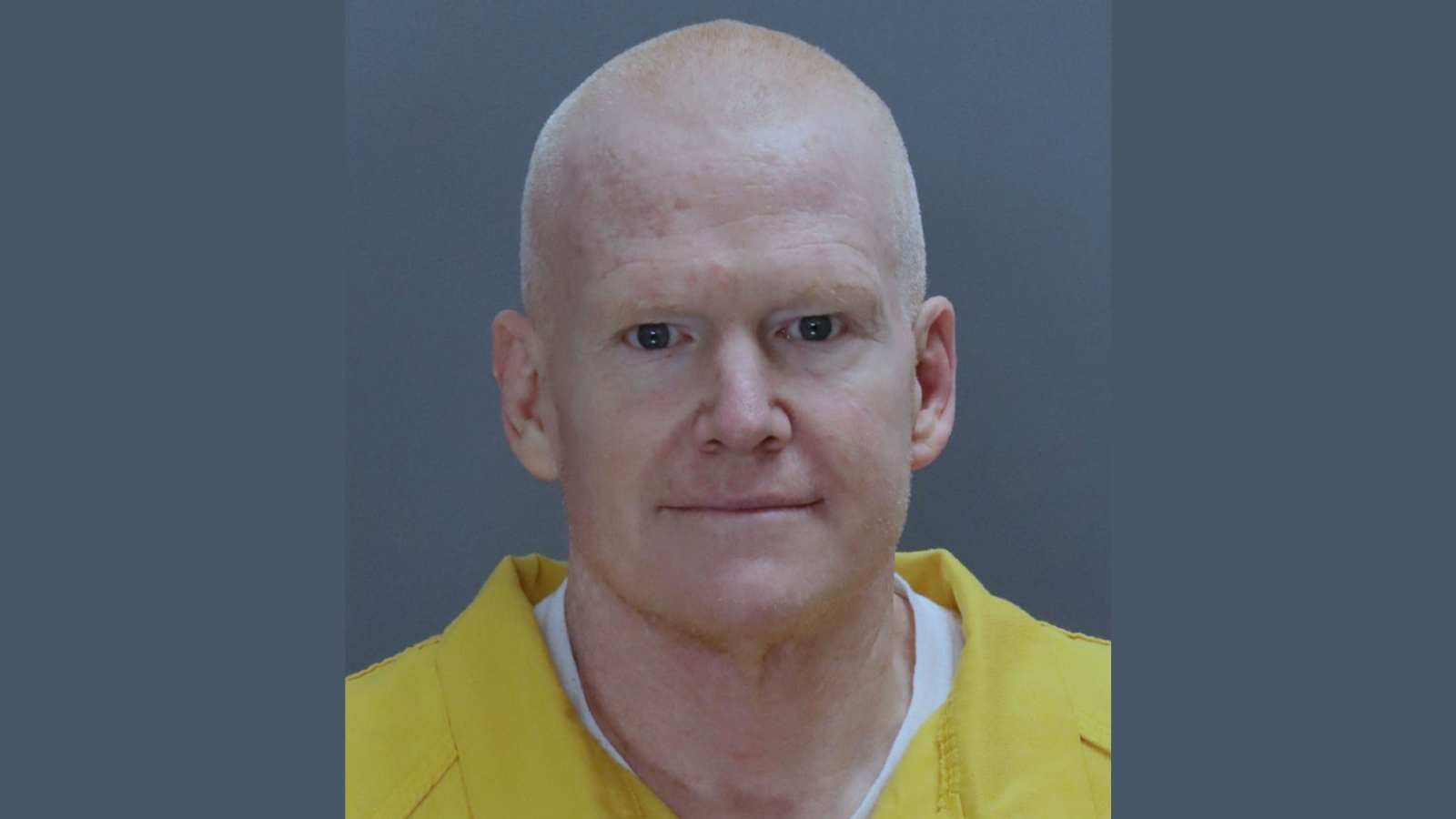

The day they found Maggie and Paul Murdaugh’s bodies near the dog kennels at the family’s hunting estate in Islandton, South Carolina, it was already the worst night in what had been one of the most storied legal dynasties in the American South.
For 87 years, the Murdaugh family name had come to represent prosecutorial power in coastal South Carolina, where three successive generations controlled the local prosecutor’s office.
They were royalty in Hampton County, the kind of family whose name alone opened doors, whose grandfather’s portrait hung in the very courtroom where Alex would one day be tried for murder.
And on June 7, 2021, that entire century-long legacy came crashing down in a hail of gunfire in the South Carolina night, allegedly at the hands of the man who had inherited it all.
What followed that June evening was not just a criminal case. It was a reckoning. A long, twisted, deeply American reckoning with power, privilege, and what happens when a family runs a legal system for so long that the lines between the law and the Murdaughs themselves cease to exist.
And now, on May 13, 2026, the South Carolina Supreme Court has handed Alex Murdaugh something that Maggie and Paul Murdaugh will never get back: another chance.
In a unanimous 5-0 ruling, the court said Colleton County Clerk of Court Becky Hill placed her fingers on the scales of justice, thereby denying Murdaugh his right to a fair trial by an impartial jury. Just like that, two life sentences vanished.
A murder conviction, three years in the making, is gone. And a country that thought it had finally seen justice for Maggie and Paul Murdaugh is now left staring at a system that may have sabotaged itself.
How a Dynasty Built on Law Became a Crime Scene
Three generations of Randolph Murdaugh served consecutively as circuit solicitor for the state’s 14th judicial district between 1920 and 2006, and the family’s prominence led locals to call the five-county district “Murdaugh Country.”
That is not a nickname you earn by being ordinary. That is the kind of grip on a community that takes generations to build and almost nothing to lose, until it all unravels at once.
A fourth-generation son, Richard Alexander “Alex” Murdaugh, secretly led a life of crime that included acts of fraud, corruption, embezzlement, theft, and drug offenses spanning decades and involving dozens of victims, many of whom were disadvantaged.
He did all of this while wearing the family name like a shield, practicing at the firm his great-grandfather founded, and hobnobbing with the same law enforcement officials his family had worked alongside for nearly a century.
In the early 2000s, he developed an addiction to oxycodone and began stealing money from his firm and clients to pay for drugs. Nobody stopped him. Because in Murdaugh Country, nobody could.
The unraveling began not with a murder but with a boat. The Murdaugh family’s legal troubles began after the February 2019 death of 19-year-old Mallory Beach in a boating accident.
The driver of the boat, her friend Paul Murdaugh, Alex Murdaugh’s youngest son, was indicted for boating under the influence, causing death. Paul pleaded not guilty and was awaiting trial when the world changed forever. By June 2021, Paul was dead, and so was his mother.
Alex called his wife, Maggie, on June 7, 2021, and asked her to meet with him at the Murdaugh family hunting lodge in Islandton, purportedly so that the two of them could travel together to see Alex’s father, Randolph Murdaugh III, who was terminally ill.
Maggie texted a friend, saying her husband sounded “fishy” and was “up to something.” Hours later, she and Paul were found shot dead near the dog kennels. Three days after the murders, Randolph Murdaugh III, Alex’s father, died.
The Trial That Captured the Country
Local media called the trial South Carolina’s “trial of the century” and “one of the most high-profile and sensational cases in South Carolina legal history.”
It had everything: old money, opioid addiction, dead bodies, stolen millions, a family so embedded in the legal system that investigators had to call in outside agencies just to get an impartial look.
The investigation was heavily criticized by Murdaugh’s defense attorney, Dick Harpootlian, during the trial; the crime scene was spoiled by rain, police reportedly failed to collect various evidence, and family members and friends were allowed to walk through the scene.
Prosecutors accused Murdaugh of carrying out the killings to earn pity and distract from financial crimes that threatened to derail his public reputation. The financial picture painted at trial was grotesque.
Murdaugh pleaded guilty to stealing around $12 million from his clients and is currently serving a 40-year federal sentence. At trial, that financial rot was put on full display, and Murdaugh’s lawyers argued it was prejudicial overkill that had no business in a murder case.
The judge disagreed, and the jury deliberated for roughly three hours before finding him guilty on all counts in March 2023. Then came Becky Hill.
The Clerk Who Wanted To Be Famous
@crmnallyobsessed Becky Hill, a former South Carolina court official known for her involvement in Alex Murdaugh’s 2023 double-murder trial, pleaded guilty on Monday, December 8, to multiple misconduct charges. The charges stem from the broader controversy over alleged jury tampering in the Murdaugh trial. Hill did not plead guilty to tampering, and both she, her attorneys and state prosecutors maintain no jury tampering occurred. Still, the misconduct admissions add new weight to a key battle ahead. Murdaugh’s defense team plans to make alleged jury tampering the centerpiece of their February 2026 arguments before the South Carolina Supreme Court as they seek to overturn his murder convictions. Hill’s misconduct primarily involved using her elected office as Colleton County Clerk of Court for personal financial gain. She promoted a book she wrote about the Murdaugh trial while working in her official capacity, among other violations of the public trust. #alexmurdaugh #truecrime ♬ original sound – Criminally Obsessed
Murdaugh’s appeal focused on alleged comments to jurors from Hill, who worked during Murdaugh’s trial and later wrote a tell-all book about it.
Murdaugh’s attorneys argued Becky Hill improperly influenced jurors during the trial by making comments such as “watch his body language,” implying Murdaugh’s guilt.
On the day Murdaugh testified in his own defense, Hill allegedly told jurors it was “an epic day” and urged them to pay careful attention to the defendant’s demeanor.
One juror recalled that Hill told jurors not to be fooled by the evidence Murdaugh’s defense presented, saying something to the effect of: “They’re going to say things that will try to confuse you. Don’t let them confuse you or convince you or throw you off.”
The documents say Hill tried to insert herself into the jury’s deliberations, and that her desire for a guilty verdict was in line with her stated goal of selling more copies of the book she planned to write.
The book was titled “Behind the Doors of Justice: The Murdaugh Murders.” The court, in a line that deserves to be framed, noted: “As her book’s title suggests, it turns out Hill was quite busy behind the doors of justice, thwarting the integrity of the justice system she was sworn to protect and uphold.” The book was later pulled from publication after Hill was found to have plagiarized portions of it.
Hill was arrested in May 2025 for some of her conduct during the trial. She eventually pleaded guilty to obstruction of justice and perjury, specifically for lying about showing a reporter sealed photos from the trial, and was sentenced to probation. Three years on probation, for helping tank one of the most scrutinized murder trials in modern American history.
One juror who testified during the appeals trial wrote in her sworn affidavit: “I had questions about Mr. Murdaugh’s guilt but voted guilty because I felt pressured by the other jurors.” That sentence alone is enough to make your stomach drop.
Whatever you believe about Alex Murdaugh’s guilt, a juror saying she had doubts and voted guilty under pressure is the exact kind of thing that unravels a conviction, and now it has.
The Bitter Pill No One Wants To Swallow
Here is where it gets complicated, and where most coverage quietly looks away. Alex Murdaugh is not walking out of prison. The 57-year-old pleaded guilty to stealing around $12 million from his clients and is currently serving a 40-year federal sentence.
He admits to being a thief, a liar, an insurance cheat, and a bad lawyer, but has adamantly denied killing his wife and son. A new murder trial may not change his day-to-day reality much, practically speaking. But symbolically and legally, it changes everything.
The uncomfortable question that legal experts and true crime devotees are now quietly wrestling with is this: Did Becky Hill’s misconduct actually change the outcome, or did it simply give a guilty man a procedural lifeline?
A few jurors affirmed in affidavits and testimony that Hill made these comments, but the majority said they did not hear them. In January 2024, after a one-day evidentiary hearing, retired South Carolina Chief Justice Jean Toal determined those comments did not influence the jury’s verdict and denied Murdaugh’s request for a new trial.
The full Supreme Court saw it differently, unanimously. But prosecutors were not wrong when they noted, as the CBS report highlighted, that the evidence against Murdaugh was described as overwhelming, and that the clerk’s comments were fleeting in the grand scheme of the trial.
The justices in their ruling praised prosecutors, the defense team, and the judge for outstanding work, heaping all the blame for having to retry Murdaugh on Hill.
South Carolina Attorney General Alan Wilson’s office was blunt in its response, saying it would aggressively seek to retry Murdaugh for the murders of Maggie and Paul as soon as possible, and that no one is above the law.
That retry will be expensive, emotionally brutal for the victims’ surviving family, and loaded with the weight of everything this case already carries.
The real story here is not about Alex Murdaugh’s guilt or innocence. It is about what happens when a system corrodes from the inside, when the people appointed to protect fairness decide that fame and book deals matter more than justice.
Becky Hill wanted to be part of the story so badly that she may have broken it. A clerk, chasing a celebrity, allegedly corrupted a trial. And now Maggie and Paul Murdaugh’s family must relive all of it again because the one institution that was supposed to be impartial could not help itself.
A century of Murdaugh power bent South Carolina’s legal system for generations. It turns out that the system did not need the Murdaughs to break it. It managed that just fine on its own.