
00:00:02 Speaker A
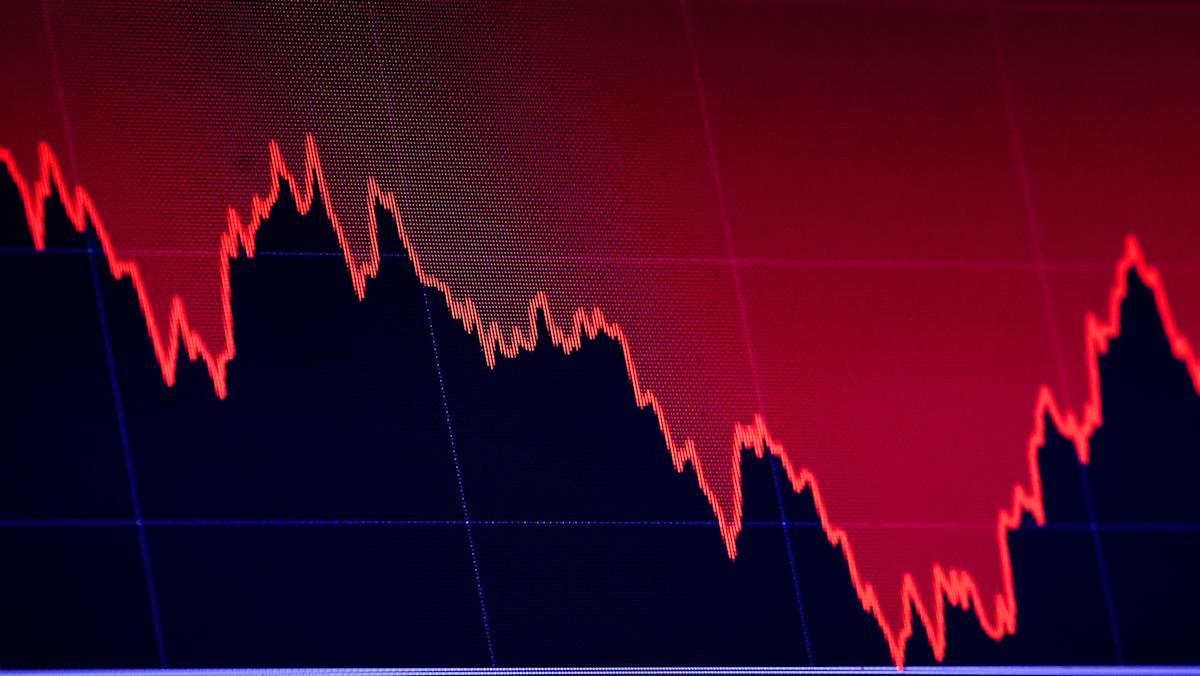
Dow under pressure heading into the closing bell and there have been a few components causing more pressure than others. Yahoo Finance's Jared Blikre joining us now with a closer look, Jared.
00:00:16 Jared Blikre
Thank you, Josh. Yes, the Dow's underwater by about 250 points. We had some disappointing earnings reactions in the form of IBM, or from the company's IBM, and also Honeywell. And we'll take a look at the board in a second. Just wanted to show you the intraday price action down about half a percent. And by the way, just want to mention that we missed a record closing high yesterday by only points. It was just very close. But that doesn't really mean too much in the long scheme of things. What matters is that the Dow has been held back by some of these bigger names. And I mentioned IBM and Honeywell, I kind of picked on them, but year to date, they haven't really been the big problem in the Dow. So now we have this heat map for the Dow showing everything, all the components with their year-to-date performance. What stands out? There's Nvidia, the biggest stock in the solar system, up almost 30%. Apple here down 14%. United Health, United Health's down 44%. This is intraday. Just let's dial up that year to date, and you can see they really fell into some problems in that April time period when a lot of stocks, most stocks, were bottoming and rocketing higher after that 4/8 low. That would be April 8th. Salesforce, um, that's United Health again. Salesforce is another one that's been underwater. It's down 20%. Really wasn't able to climb off those lows the way most other stocks were. And in fact, there are four different stocks here that were underwater for the year to date by double digits. And Merck is the last one. It's down 15.5%. Uh, so let me just show you a chart of the Dow. I'm going to arrange everything by performance, and there are four big losers down there: Apple, Merck, Salesforce, and United Health. And I'm going to show you the Dow. This is year to date. And here is yesterday when we just were missing those brand new highs from February, not able to top those. Now, let me show you an alternate scenario chart that I've computed for the Dow taking out some of these components one by one. So I have actually five different lines here. The one at the bottom is the actual Dow. That's in, let's call that peach right there, and it terminates right here at about 45,000. And if you take out United Health, guess what? It rockets up to 46,620. So that's this yellow line right here. And there's a pretty big gap between these two right here. And I should mention too that the Dow is computed as an index. It's calculated as an index a very old-fashioned way. Since the late 1800s, it has been done price-weighted. Now, when we talk about the S&P 500 and the Nasdaq, those are market cap or float-weighted. The biggest stocks like Apple and Nvidia, they get the most action, they get the most. But in the Dow, it's the higher price stocks. And it's really interesting because United Health was the highest price stock in the Dow, and it's been cut in half. So that accounts for a lot of the difference here. So just to recap, we got 45,000 right as of yesterday's close. That's Wednesday's close. Without United Health, 46,000. If you take out also Salesforce, goes up to 473. Then if you take out Merck, 475. And finally, if you take out Apple as well, it's 47,989. And by the way, you're hitting record highs on all of those recently, and they have a nice, gently sloping upward trend line instead of a lot of the sideways action that you're seeing in the actual Dow. So it just goes to show you that you can calculate these indices many different ways. And the Dow itself, arguably, kind of like a fund. And it is selected by various people who control the entrants. And we haven't had a change in the Dow since last year, which is why this year-to-date calculation has been helpful here. But it just goes to show you that it only takes a few stocks to really spoil the party and prevent you from getting some of those new highs that we've been getting in the other indices, which are calculated in a much more modern method. I'll send it back to you there.
00:07:04 Speaker A
All right. Thank you, Jared.