


“At some point in the growth of a boom all aspects of property ownership become irrelevant except the prospect of an early rise in price.” — John Kenneth Galbraith
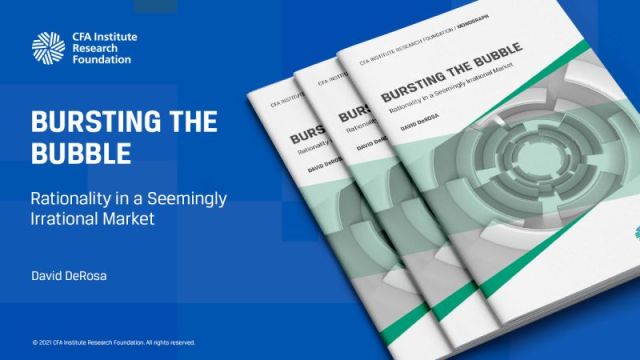
Countless asset bubbles have inflated and burst over the course of history and it is an absolute certainty that more will come. Bubbles recur so often because hundreds of thousands of years of evolution have hardwired the herd instinct into the human brain. Despite the repetition, every bubble feels unique in its own warped way. But after studying dozens of them, I’ve found that investors can protect themselves by recognizing the trajectory that most follow. The cryptomania of the 2010s and 2020s is just the latest example, and as far as bubbles go, it fits the pattern quite well.
A Bubble’s Life Stages
1. A New Innovation with Potential Mass Market Applications Emerges
Tulip manias notwithstanding, most asset bubbles tend to form around some promising new technology that can radically transform society. Think: canals, railroads, consumer electronics, and e-commerce. Mass market appeal is what makes asset bubbles difficult to identify in the moment. They can only happen when many believe they are not happening, which ensures that the concerns of skeptics are suppressed by the noise of the crowd.
The circular logic of crypto advocates holds that cryptocurrencies represent the foundation of a new decentralized, unregulated financial system that will render traditional central banking and fiat currencies obsolete. They forget that central banks were designed specifically to mitigate the very dangers of a decentralized, unregulated financial system.
2. Early Investors Make a Windfall
First movers have a distinct advantage and often generate gargantuan returns. But their good fortune tends to owe more to luck than skill. They were simply first to arrive at the buffet. Nevertheless, as Louis D. Brandeis observed, “The weakness of human nature prevents men from being good judges of their own deservings.” Early investors boast of their achievements, attributing their success to their investment acumen. Emboldened by adulation in the media, they encourage new investors to join the stampede, which increases their wealth even further. The self-reinforcing hype cycle intensifies and the lucky first movers — the Sam Bankman-Frieds — are heralded as market gurus of a new era.

3. Late Adopters Inflate the Bubble.
Fueled by the reckless evangelism of these newly minted gurus, the fear of missing out (FOMO) galvanizes many more to join the frenzy. The flood of new capital inflates prices beyond even the most optimistic metrics of fundamental value. Battle-tested investment principles are discarded and replaced with new ones developed to rationalize the insanity: Dot-com companies no longer need to generate profits, they just need to acquire users; cryptocurrency exchanges no longer need the protections of a well-regulated banking system that were designed to prevent the very abuses in which they engage.
4. The Supply of Money Tightens.
The mania may eventually reach a point when inflated asset values and tight labor conditions stoke inflation. Central banks react by tightening monetary policies and reducing the money available to drive prices up further. Crypto investors are now experiencing this pressure.
Without central bank intervention, the mania might persist until the money simply runs out on its own. Then, when the crash comes, there is nothing to stop or mitigate the deflationary death spiral. Stories from the so-called “Hard Times” in the mid-1800s testify to the misery of such an experience.
5. Panic and Crash
As the pool of new capital dries up, sellers begin to outnumber buyers. Before long, investors conclude that the innovation may not be as world-changing or as valuable as they thought. The pain of falling asset prices soon morphs into terror that total capital loss is possible. The price of the asset crashes. In the aftermath, ruined investors discover that many companies and bubble evangelists were at best wildly optimistic and at worst clueless grifters or outright frauds.
6. Forget and Repeat
Chastened investors pledge never to make the same mistake again. But as John Kenneth Galbraith noted, “for practical purposes, the financial memory should be assumed to last, at a maximum, no more than 20 years.” Sure enough, within a decade or two, few investors keep their promise. Michael Saylor exemplifies this principle: He was caught in both the dot-com and crypto bubbles, which were separated by 21 years.
Protection from the Next Bubble
So how can we resist the updraft of the next asset bubble? It won’t be easy, but holding to a few principles may help.
1. Resist the Temptation to Cheat Time
History’s best investors — the Hetty Greens and Warren Buffetts — demonstrate extraordinary patience. They understand that successful investing is more like watching paint dry than hitting the jackpot on a slot machine. Asset bubble victims often suffer from a desire to compress the time required to turn a little money into a lot. But there are more dead-ends in investing than there are shortcuts. Remembering this principle will help us see bubbles for what they are and avoid turning a lot of money into a little.

2. Prepare to Be Lonely
Bubbles expand only when a sizable portion of the market believes the frenzy is justified. This, in turn, galvanizes FOMO. The rare voice of reason is rarely heard. In the run-up to the Great Depression, Charles E. Merrill, founder of Merrill Lynch, warned that stock prices had reached absurd levels. He was correct, but the market rose for more than a year before the crash arrived in October 1929. In the meantime, he suffered relentless ridicule and came to question his own sanity before seeking psychiatric treatment.
The principle to remember is that those who recognize asset bubbles will find that few people agree with their assessment. Perhaps the only consolation is the tight correlation between the depths of a contrarian’s loneliness and the supply of money available to fuel an asset bubble. When there is nobody left to feed the bubble, the collapse is imminent. So, the lonelier a contrarian feels, the closer the bubble is to deflating.
3. Seek Wisdom from Skeptical and Successful Investors
We don’t have to fall for asset bubbles. Some investors have repeatedly avoided them and have long and successful track records in the markets. Two of the most prominent examples today are Buffett and Charlie Munger. Neither indulged in the go-go stocks of the 1960s, the dot-com bubble of the 1990s, or the cryptomania of the 2010s and 2020s. Maybe they missed a few opportunities along the way, but that hardly offsets their accomplishments. As a precocious employee of Ray Dalio’s Bridgewater once said, “When you ask someone whether something is true and they tell you that it’s not totally true, it’s probably by-and-large true.” A corollary principle applies here. So when Buffett warns that crypto mania is a delusion that attracts charlatans or Munger describes the craze as “an investment in nothing,” we should listen.
4. Study Financial History Like It’s Your Job
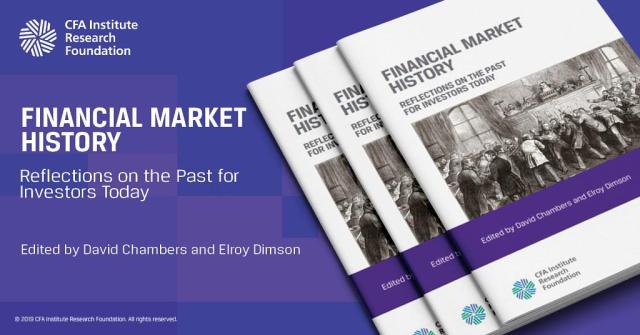
Almost every financial event — and certainly every asset bubble — has at least one compelling historical parallel. Investors who follow the lessons of financial history rather than the constant noise of the financial news will discover that the present isn’t as mysterious as most people think. Investors living in the moment may not detect the onset of the next bubble, but those who have studied dozens of previous bubbles are more likely to recognize the red flags. So, we need to study financial history like our wealth depends on it — because there is a good chance that someday it will.
Asset bubbles are a feature of financial markets that will never disappear. They are hard to detect and difficult to resist. But hopefully some of these lessons will help us abstain from participating in the next one.
If you liked this post, don’t forget to subscribe to Enterprising Investor.
All posts are the opinion of the author. As such, they should not be construed as investment advice, nor do the opinions expressed necessarily reflect the views of CFA Institute or the author’s employer.
Image credit: ©Getty Images/ JamesBrey
Professional Learning for CFA Institute Members
CFA Institute members are empowered to self-determine and self-report professional learning (PL) credits earned, including content on Enterprising Investor. Members can record credits easily using their online PL tracker.