


Quantum threat to Bitcoin: Harvest now, decrypt later
Quantum computers could quietly break Bitcoin, and a former hacker says the countdown has already begun.
David Carvalho, a one‑time teenage spam hacker turned CEO of cybersecurity firm Naoris Protocol, warns that the blockchain’s cryptographic defenses may not withstand the coming wave of quantum computing and AI‑driven breakthroughs.
At the center of his warning is a tactic known as “harvest now, decrypt later,” where attackers stockpile encrypted Bitcoin transactions today, waiting for future machines powerful enough to crack the private keys.
Carvalho’s story adds weight to his warnings. He started hacking at 13, later advising NATO and Fortune 500 companies before founding Naoris Protocol. Now he’s sounding the alarm that Bitcoin vulnerabilities to quantum computing are real; its SHA‑256 and Elliptic Curve Digital Signature Algorithm (ECDSA) protections could face a silent collapse of Bitcoin systems if the industry hesitates on upgrades.
Did you know? Google’s Willow quantum chip demonstrated an astonishing speed benchmark, solving problems in minutes that would take the fastest classical supercomputers around 10²⁵ years.
Bitcoin’s vulnerabilities to quantum computing
Bitcoin’s security relies on two cryptographic pillars: SHA‑256, which protects the mining process and transaction integrity, and ECDSA, which secures private keys behind signatures considered unbreakable by today’s machines.
Under classical computation, brute‑forcing either system would take longer than the age of the universe, but the quantum threat to Bitcoin changes that equation.
Algorithms like Shor’s could one day allow a powerful quantum computer to derive a private key from a public key in minutes, making it possible to hijack funds from any exposed address before a transaction even settles.
Security experts stress that cryptocurrency security doesn’t mean “safe until Q‑Day.” State actors and cybercrime groups are already harvesting data for the harvest now, decrypt later crypto risk, quietly building archives they hope to unlock when hardware catches up.
The mix of AI in crypto and quantum technology may speed up this timeline dramatically. Carvalho argues that AI could help identify weak points in blockchain cryptography, while quantum hardware delivers the raw power to exploit them. This combination — “how AI and quantum could break Bitcoin,” as he frames it — could bring forward the day when current cryptography no longer holds.
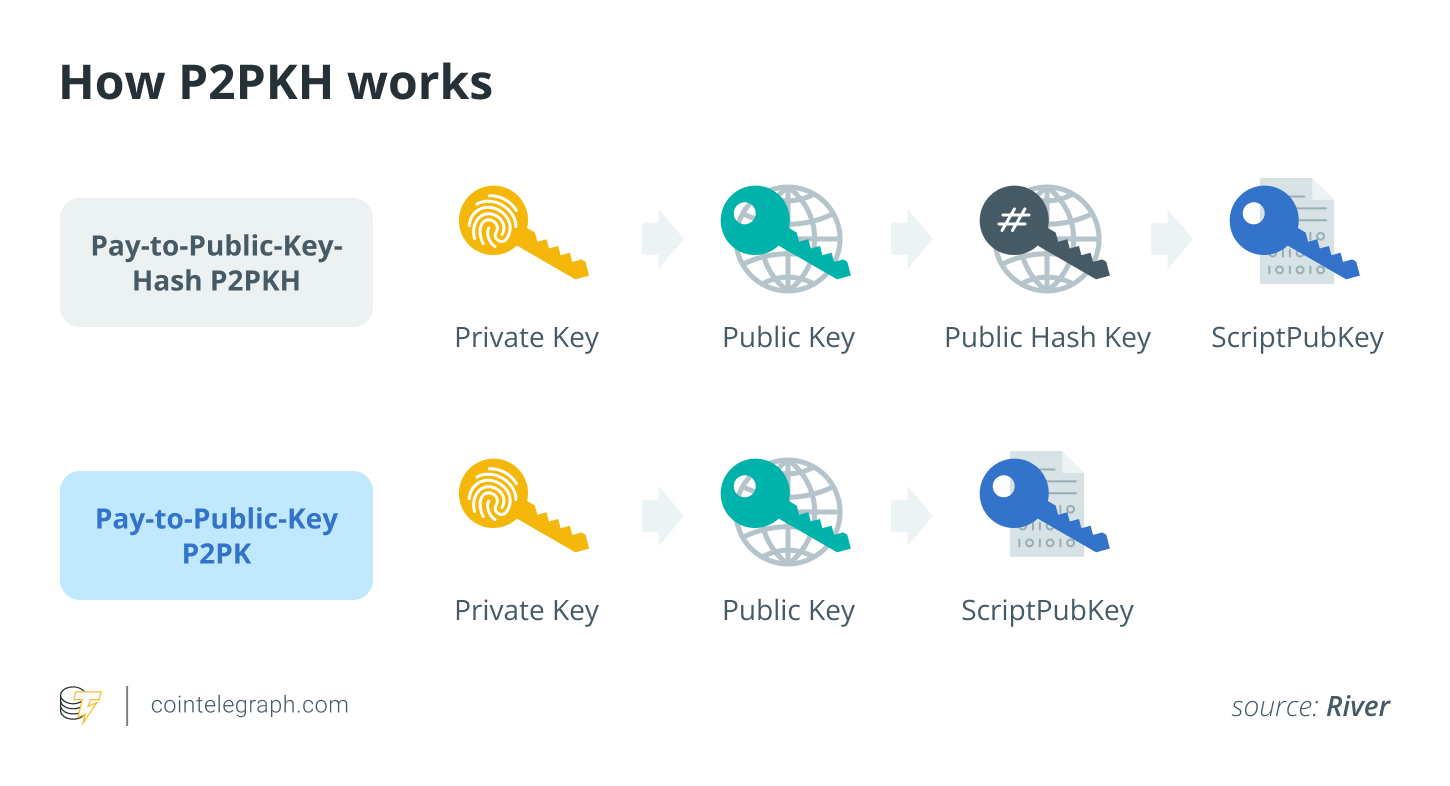
The exposure is already measurable. Roughly 25%-30% of all Bitcoin — some 6 million-7 million Bitcoin (BTC) — sits in legacy address types like pay-to-public-key (P2PK) or reused P2PK hashes. These formats reveal public keys, leaving them instantly vulnerable once quantum attacks become feasible. Those dormant and reused coins represent a huge chunk of circulating BTC and, by extension, overall Bitcoin price stability and Bitcoin adoption confidence.
Meanwhile, agencies like the National Institute of Standards and Technology and the National Security Agency are already urging a pivot to post‑quantum cryptography in crypto, with migration targets set for 2030-2035 to protect critical systems. If Bitcoin’s own upgrade lags, it could become a global case study in Bitcoin vs. quantum — a clash between the world’s leading digital asset and a new class of computing that rewrites the rules of digital asset protection and cryptocurrency security.
Carvalho warns the transition window is already narrowing. Without a decisive Bitcoin cryptography update and investment in quantum‑resistant blockchain security, he fears the industry could discover too late that the risk of quantum disruption wasn’t a distant “someday.”
Did you know? Hardware studies suggest that breaking a Bitcoin wallet’s ECDSA key within one hour would (optimistically) require around 13 million logical qubits (or more than 300 million physical qubits, depending on error correction regimes).
The silent collapse of Bitcoin systems?
David Carvalho warns of what he calls a “silent collapse of Bitcoin systems,” a new breed of AI‑driven quantum attacks that could break signatures, transfer funds and bypass detection entirely.
Instead of a headline‑grabbing exploit, these assaults would slowly corrode trust in the blockchain itself, reshaping balances and consensus without leaving obvious forensic traces.
In this vision, conventional security measures would prove almost useless. Penetration tests, anomaly‑detection software and even watchdog nodes might all miss the breach. AI could automatically probe for weak spots in blockchain cryptography, simulate network behavior and adapt its tactics on the fly, while quantum machines quietly crunch private keys in the background.
Carvalho’s warning is blunt: There won’t be a livestream of a cracking algorithm in action. Instead, integrity would fray invisibly — missing transactions here, a governance vote quietly subverted there, funds inexplicably redirected — until Bitcoin adoption suffers a confidence crisis.
Quantum-resistant blockchain security, explained
Developers are taking the quantum threat to Bitcoin seriously, and several defensive efforts are already in motion. However, they reveal how difficult true protection will be.
- BIP‑360 (Pay‑to‑Quantum‑Resistant‑Hash, or P2QRH) introduces quantum‑resistant signature schemes and hybrid address formats. These allow Bitcoin to migrate gradually to post‑quantum cryptography in crypto systems, layering new protections without breaking the old ones overnight.
- Post‑quantum infrastructure firms like Naoris Protocol are building decentralized networks designed to embed quantum‑resistant blockchain security directly into transaction layers, pairing real‑time threat detection with cryptography that doesn’t depend on vulnerable elliptic curves.
- Quantum‑safe technologies such as STARK‑based zero‑knowledge rollups are gaining attention for their hash‑based proof systems, which sidestep many of the weaknesses quantum computers are expected to exploit.
But even the best solutions run into a reality check: Bitcoin’s strength is its decentralization, and that makes sweeping upgrades hard. A Bitcoin cryptography update (especially one as deep as replacing its core signature scheme) requires broad agreement among miners, node operators, wallet providers and users.
Even after consensus, the migration itself will be slow and messy. Millions of users will need to move coins from legacy addresses into quantum‑resistant ones. If adoption stalls, older coins will remain exposed, undermining the very goal of cryptocurrency security in the crypto security in the quantum era.
Did you know? The Naoris Sub‑Zero Layer can bolt into Ethereum Virtual Machine-compatible blockchains within 48 hours, delivering post‑quantum protections without triggering hard forks or disrupting existing contracts.
Crypto security in the quantum era
Not everyone shares Carvalho’s alarm.
Michael Saylor, executive chairman of Strategy, has dismissed the Bitcoin vs. quantum narrative as exaggerated. Speaking on CNBC, he framed it as a “quantum marketing gimmick,” pointing out that companies like Google or Microsoft won’t release machines capable of breaking their own encryption and that, if needed, “Bitcoin can just be upgraded.”
Broader expert sentiment is less dismissive but still measured. Many cryptographers see the risk horizon for Bitcoin vulnerabilities to quantum computing stretching a decade or more, with the most cautious estimates pointing to the 2040s. Optimists say the tipping point might not arrive until well past 2035; pessimists warn it could come within five to 10 years.
Panic isn’t productive, but complacency could be worse. Most specialists in cryptocurrency security agree that preparing now for how quantum computing could hack Bitcoin wallets is far safer than scrambling later.
If Bitcoin’s defenders coordinate on digital asset protection today, the transition to post‑quantum cryptography in crypto might look like a controlled upgrade. Delay too long, and it could look more like the “silent collapse” Carvalho fears.