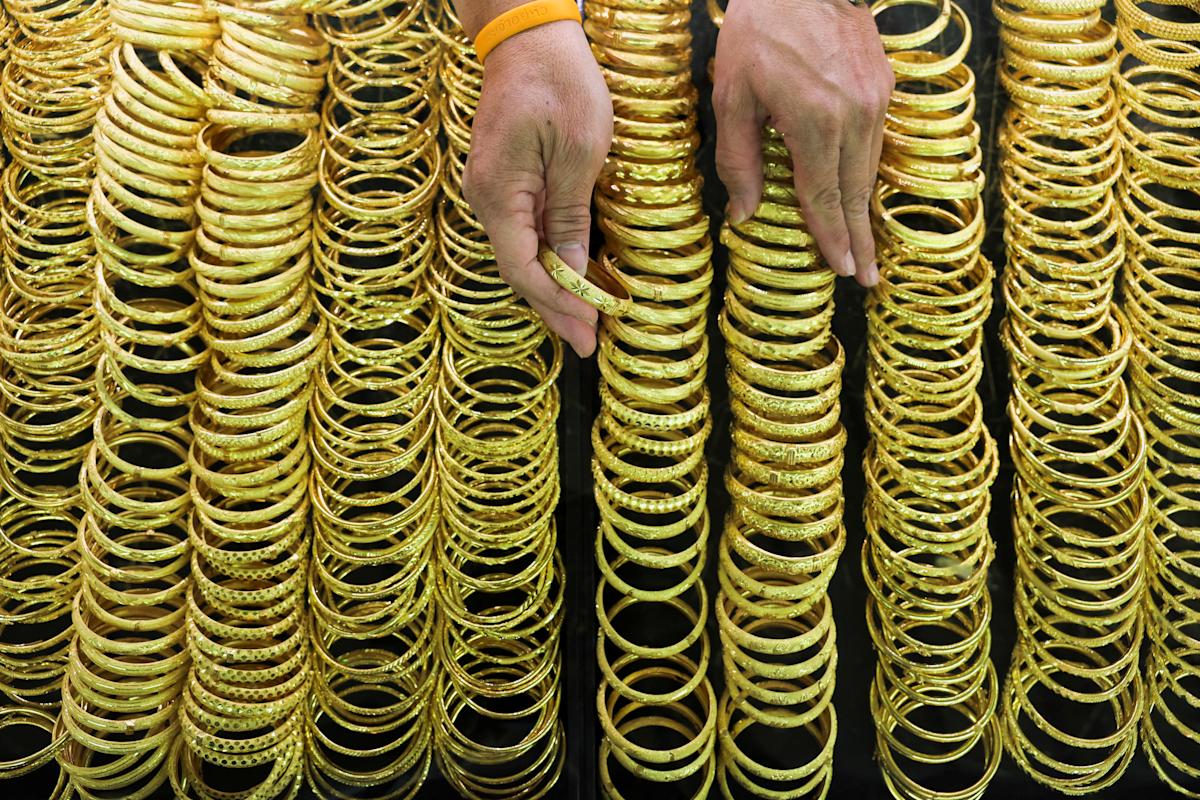

Gold prices struggled to maintain substantial gains on Monday morning, easing to around $3,360 per ounce as traders took profits from the previous session’s rally, spurred by weak US jobs data that revived expectations of a rate cut by the US Federal Reserve.
At the time of writing, gold futures were priced at $3,411.60 per ounce, while spot gold remained relatively flat at $3,360.09 per ounce.
“Gold has made a conservative start to the week following Friday's price jump. A combination of profit-taking and dollar stabilisation has caused gold to ease marginally to kick-off the week,” said Tim Waterer, chief market analyst at KCM Trade.
Read more: FTSE 100 LIVE: London stocks up as shares in lenders jump after car financing court ruling
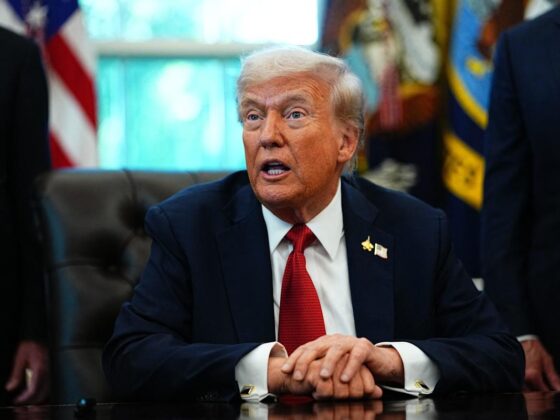
Last week, the market was rattled by US president Donald Trump’s decision to impose sharp tariffs on exports from key trading partners, including Canada, Brazil, India and Taiwan.
“With Trump on the tariff warpath once again, and the soft US jobs report increasing the odds that we could see a September Federal Open Market Committee (FOMC) rate cut, any pullbacks in the precious metal could be of a shallow nature,” Waterer added.
Gold, often seen as a safe-haven asset during periods of political and economic uncertainty, tends to benefit in a low interest rate environment, which heightens its appeal to investors.
In a bullish move, Citi upgraded its gold price forecast on Monday, raising it to $3,500 per ounce over the next three months, up from the previous estimate of $3,300. The bank also adjusted its expected trading range to $3,300–$3,600 from $3,100–$3,500, citing a deteriorating near-term US growth and inflation outlook.
“US growth and tariff-related inflation concerns are set to remain elevated during 2H2025, which, alongside a weaker dollar, are set to drive gold moderately higher, to new all-time highs,” Citi stated in its report.
The bank also noted that gross gold demand has surged by over one-third since mid-2022, contributing to the dramatic rise in prices, which are expected to nearly double by the second quarter of 2025.
Oil prices edged lower on Monday morning after OPEC+ confirmed plans to increase production by 547,000 barrels per day (bpd) in September, a move widely anticipated by market participants.
Brent crude futures lost 1.3% to trade at $68.78 per barrel, at the time of writing, while West Texas Intermediate futures retreated by 1.3% to $66.43 a barrel.
The production increase marks the full and early reversal of OPEC+’s most significant supply cuts, which had been implemented to support prices during the pandemic. It also includes a separate boost for the United Arab Emirates (UAE), raising total output by approximately 2.5 million bpd, roughly 2.4% of global oil demand. OPEC+ justified the move by citing a resilient global economy and low stockpiles.