
Business Insights
  • Home
  • Crypto
  • Finance Expert
  • Business
  • Invest News
  • Investing
  • Trading
  • Forex
  • Videos
  • Economy
  • Tech
  • Contact

Archives

  • March 2026
  • February 2026
  • January 2026
  • December 2025
  • November 2025
  • October 2025
  • September 2025
  • August 2025
  • July 2025
  • June 2025
  • May 2025
  • April 2025
  • March 2025
  • February 2025
  • January 2025
  • December 2024
  • November 2024
  • October 2024
  • September 2024
  • August 2024
  • July 2024
  • June 2024
  • May 2024
  • April 2024
  • March 2024
  • February 2024
  • August 2023
  • January 2023
  • December 2021
  • July 2021
  • November 2019
  • October 2019
  • September 2019
  • August 2019
  • July 2019
  • June 2019
  • May 2019
  • April 2019
  • March 2019
  • February 2019
  • January 2019

Categories

  • Business
  • Crypto
  • Economy
  • Finance Expert
  • Forex
  • Invest News
  • Investing
  • Tech
  • Trading
  • Uncategorized
  • Videos
Apply Loan
Money Visa
Advertise Us
Money Visa
  • Home
  • Crypto
  • Finance Expert
  • Business
  • Invest News
  • Investing
  • Trading
  • Forex
  • Videos
  • Economy
  • Tech
  • Contact
Contributor: A Trump deregulator may set us up for a sequel to the 2008 crisis
  • Business

Contributor: A Trump deregulator may set us up for a sequel to the 2008 crisis

  • May 29, 2025
  • Roubens Andy King
Total
0
Shares
0
0
0
Total
0
Shares
Share 0
Tweet 0
Pin it 0

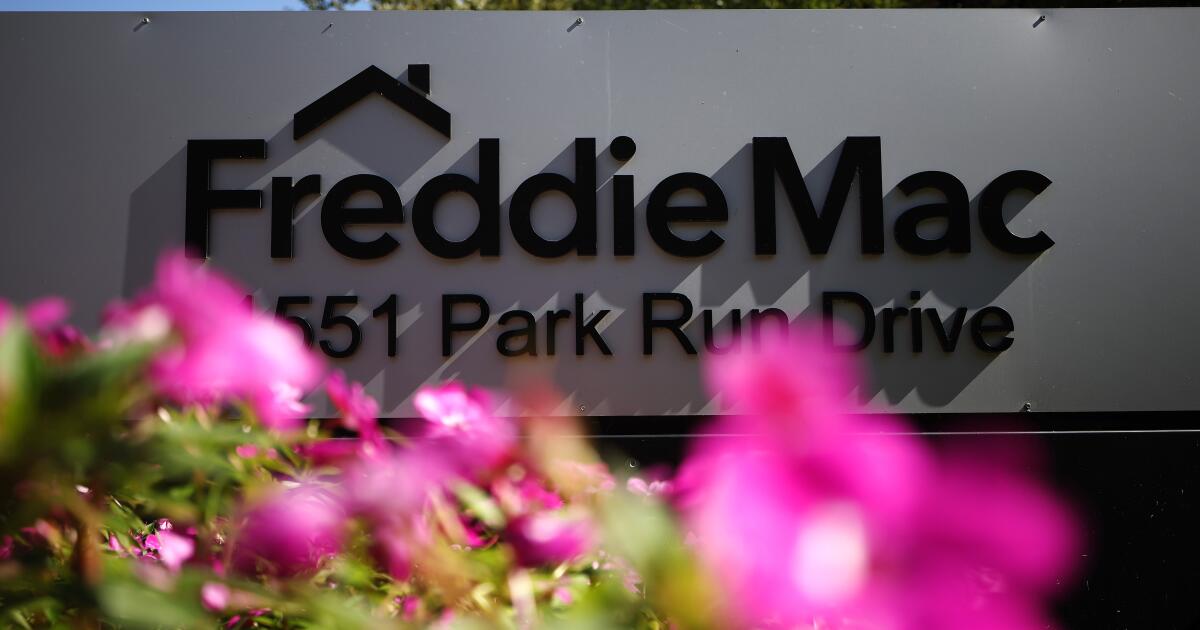
The movie “The Big Short” — dramatizing the reckless behavior in the banking and mortgage industries that contributed to the 2008 financial crisis — captures much of Wall Street’s misconduct but overlooks a central player in the collapse: the federal government, specifically through Fannie Mae and Freddie Mac.

These two government-created and government-sponsored enterprises encouraged lenders to issue risky home loans by effectively making taxpayers co-sign the mortgages. This setup incentivized dangerous lending practices that inflated the housing bubble, eventually leading to catastrophic economic consequences.

Another critical but overlooked factor in the collapse was the Community Reinvestment Act. This federal law was intended to combat discriminatory lending practices but instead created substantial market distortions by pressuring banks to extend loans to borrowers who might otherwise have been deemed too risky. Under threat of regulatory penalties, banks significantly loosened lending standards — again, inflating the housing bubble.

After the bubble inevitably burst, Fannie and Freddie were placed under conservatorship by the Federal Housing Finance Agency. The conservatorship imposed rules aimed at preventing future taxpayer-funded bailouts and protecting the economy from government-fueled market distortions.

Now, President Trump’s appointee to lead that agency, Bill Pulte, is considering ending this conservatorship without addressing the core structural flaw that fueled the problem in the first place: implicit government guarantees backing all Fannie and Freddie mortgages. If Pulte proceeds without implementing real reform, taxpayers on Main Street are once again likely to be exposed to significant financial risks as they are conscripted into subsidizing lucrative deals for Wall Street.

Without genuine reform, the incentives and practices that led to the crisis remain unchanged, setting the stage for a repeat disaster.

Pulte’s proposal isn’t likely to unleash free-market policies. Instead, it could further rig the market in favor of hedge funds holding substantial stakes in Fannie and Freddie, allowing them to profit enormously from the potential upside, while leaving taxpayers to bear all the downside risks.

A meaningful solution requires Fannie and Freddie to significantly strengthen their capital reserves. The two government-sponsored enterprises still remain dangerously undercapitalized. A report from JP Morgan Chase describes it this way: “Despite steady growth in [their net worth], the GSEs remain well below the minimum regulatory capital framework requirements set by the Federal Housing Finance Agency in 2020.” Imposing robust capital requirements similar to those that govern private banks would oblige the two enterprises to internalize their risks, promoting genuine market discipline and accountability.

Further reforms should address transparency and oversight. Enhanced disclosure standards would allow investors, regulators and the public to better assess risks. Additionally, limiting the types of mortgages these entities can guarantee could reduce exposure to the riskiest loans, further protecting taxpayers. Implementing clear rules that prevent Fannie and Freddie from venturing into speculative financial products would also mitigate potential market distortions.

Critically, the federal government must clearly communicate that future bailouts are not an option. Explicitly removing government guarantees would compel Fannie and Freddie to operate responsibly, knowing that reckless behavior will lead to their insolvency, not to another taxpayer rescue. Clear legal separation from government backing is essential to prevent moral hazard.

The combination of government guarantees, regulatory pressure from policies such as the Community Reinvestment Act and inadequate capital standards created the perfect storm for the 2008 financial crisis. Ignoring these lessons and repeating past mistakes would inevitably lead to a similar disaster.

Proponents of prematurely releasing Fannie and Freddie argue that market conditions have changed and risk management has improved. Yet, history repeatedly demonstrates that without structural changes, financial entities — particularly those shielded by government guarantees — inevitably revert to risky behavior when market pressures and profit incentives align. Markets function best when participants bear the full consequences of their decisions, something impossible under the current structure of these government-sponsored enterprises.

Ultimately, the only responsible approach is removing taxpayers from the equation entirely. Fannie Mae and Freddie Mac should participate in the mortgage market only as fully private entities, without any implicit government guarantees.

The American public doesn’t need a sequel to “The Big Short.” The painful lessons of the 2008 crisis are too recent and too severe to be ignored or forgotten. Market discipline, fiscal responsibility and genuine reform — not government-backed risk-taking — must guide our approach going forward. We can only hope that the Trump administration chooses fiscal responsibility over risky experiments that history has already shown end in disaster.

Veronique de Rugy is a senior research fellow at the Mercatus Center at George Mason University. This article was produced in collaboration with Creators Syndicate.

Total
0
Shares
Share 0
Tweet 0
Pin it 0
Roubens Andy King

Previous Article
SingPost – Strategic focus on unlocking value
  • Invest News

SingPost – Strategic focus on unlocking value

  • May 29, 2025
  • Roubens Andy King
Read More
Next Article
The Proxies 2025: A celebration of substantial corporate perks
  • Finance Expert

The Proxies 2025: A celebration of substantial corporate perks

  • May 29, 2025
  • Roubens Andy King
Read More
You May Also Like
Walmart+ adds Peacock to streaming offerings to better compete with Amazon Prime
Read More
  • Business

Walmart+ adds Peacock to streaming offerings to better compete with Amazon Prime

  • Roubens Andy King
  • September 3, 2025
Weak pound and yen shore up dollar, bonds and payrolls in focus
Read More
  • Business

Weak pound and yen shore up dollar, bonds and payrolls in focus

  • Roubens Andy King
  • September 3, 2025
Salesforce CEO Marc Benioff says he cut 4,000 support roles because of AI
Read More
  • Business

Salesforce CEO Marc Benioff says he cut 4,000 support roles because of AI

  • Roubens Andy King
  • September 2, 2025
Let’s Break Down What You Need to Be Watching This Week
Read More
  • Business

Let’s Break Down What You Need to Be Watching This Week

  • Roubens Andy King
  • September 2, 2025
Google won’t be forced to sell its Chrome browser, judge rules
Read More
  • Business

Google won’t be forced to sell its Chrome browser, judge rules

  • Roubens Andy King
  • September 2, 2025
Gold price hits record high as investors seek safe haven | Gold
Read More
  • Business

Gold price hits record high as investors seek safe haven | Gold

  • Roubens Andy King
  • September 2, 2025
How Is Chevron’s Stock Performance Compared to Other Oil & Gas Exploration & Production Stocks?
Read More
  • Business

How Is Chevron’s Stock Performance Compared to Other Oil & Gas Exploration & Production Stocks?

  • Roubens Andy King
  • September 2, 2025
Bunker Hill tower One California Plaza goes into receivership
Read More
  • Business

Bunker Hill tower One California Plaza goes into receivership

  • Roubens Andy King
  • September 2, 2025

Recent Posts

  • I invest $2,000/month 👀🤑 #shorts
  • a constraint on AI development in emerging countries
  • Studying vs Business: Real Income Truth!💥#shorts #finance #business
  • Mexico: Waiting for the USMCA
  • $400,000+ Of LGBT Debt | Financial Audit
Featured Posts
  • I invest ,000/month 👀🤑 #shorts 1
    I invest $2,000/month 👀🤑 #shorts
    • March 7, 2026
  • a constraint on AI development in emerging countries 2
    a constraint on AI development in emerging countries
    • March 6, 2026
  • Studying vs Business: Real Income Truth!💥#shorts #finance #business 3
    Studying vs Business: Real Income Truth!💥#shorts #finance #business
    • March 6, 2026
  • Mexico: Waiting for the USMCA 4
    Mexico: Waiting for the USMCA
    • March 6, 2026
  • 0,000+ Of LGBT Debt | Financial Audit 5
    $400,000+ Of LGBT Debt | Financial Audit
    • March 5, 2026
Recent Posts
  • Federal Reserve Board – Agencies clarify the capital treatment of tokenized securities
    Federal Reserve Board – Agencies clarify the capital treatment of tokenized securities
    • March 5, 2026
  • Federal Reserve Board – Federal Reserve Board announces termination of enforcement action with Wells Fargo
    Federal Reserve Board – Federal Reserve Board announces termination of enforcement action with Wells Fargo
    • March 5, 2026
  • Best SIP Plans for 2026 | Best SBI Mutual Funds to invest in 2025 | SBI Mutual Funds for beginners
    Best SIP Plans for 2026 | Best SBI Mutual Funds to invest in 2025 | SBI Mutual Funds for beginners
    • March 4, 2026
Categories
  • Business (2,057)
  • Crypto (2,023)
  • Economy (225)
  • Finance Expert (1,687)
  • Forex (2,016)
  • Invest News (2,442)
  • Investing (2,040)
  • Tech (2,056)
  • Trading (2,024)
  • Uncategorized (2)
  • Videos (993)

Subscribe

Subscribe now to our newsletter

Money Visa
  • Privacy Policy
  • DMCA
  • Terms of Use
Money & Invest Advices

Input your search keywords and press Enter.