


Jimmy Song, a Bitcoin (BTC) developer and advocate, slammed the decision by Bitcoin Core developers to remove the OP_Return limit for non-monetary data embedded on the Bitcoin blockchain in the upcoming Bitcoin Core 30 upgrade, calling it “fiat” mentality.
Song accused the Core developers of deflecting user concerns about removing the OP_Return limit, which is currently 80 bytes in size, and ignoring the significant pushback from the Bitcoin community and node runners. He also said:
“The idea that spam is difficult to define, and because of this ambiguity, we shouldn't be making any distinctions at all in the software, is a time-wasting argument from fiat politics where you pretend not to know the obvious, so the actual debate can never get off the ground — the non-monetary uses of Bitcoin are spam.
You can argue whether that's something desirable or not, but saying you can't define it is a stalling tactic meant to avoid the real argument about actual impact — particularly, the long-term impact of this change,” Song continued.
The OP_Return debate has raged on for nearly six months, and is reminiscent of the Bitcoin block size wars that took place between 2015 and 2017, which eventually resulted in a hard fork of the Bitcoin protocol that spawned Bitcoin Cash (BCH), leading some in the Bitcoin community to speculate if the OP_Return wars will result in a similar split.
Related: Taproot creators didn’t foresee its ‘trolling value’ — Bitcoin dev
Node runners vote with their feet in historic exodus to Bitcoin Knots
The decision by Bitcoin Core devs to unilaterally blow open the OP_Return data limit has left the Bitcoin community divided and driven record numbers of Bitcoin node runners to Bitcoin Knots, an alternative implementation of the Bitcoin node software.
This surge in nodes running Bitcoin Knots, which now account for about 20% of the network, compared to about 1% in 2024, represents a near-vertical leap in just nine months.
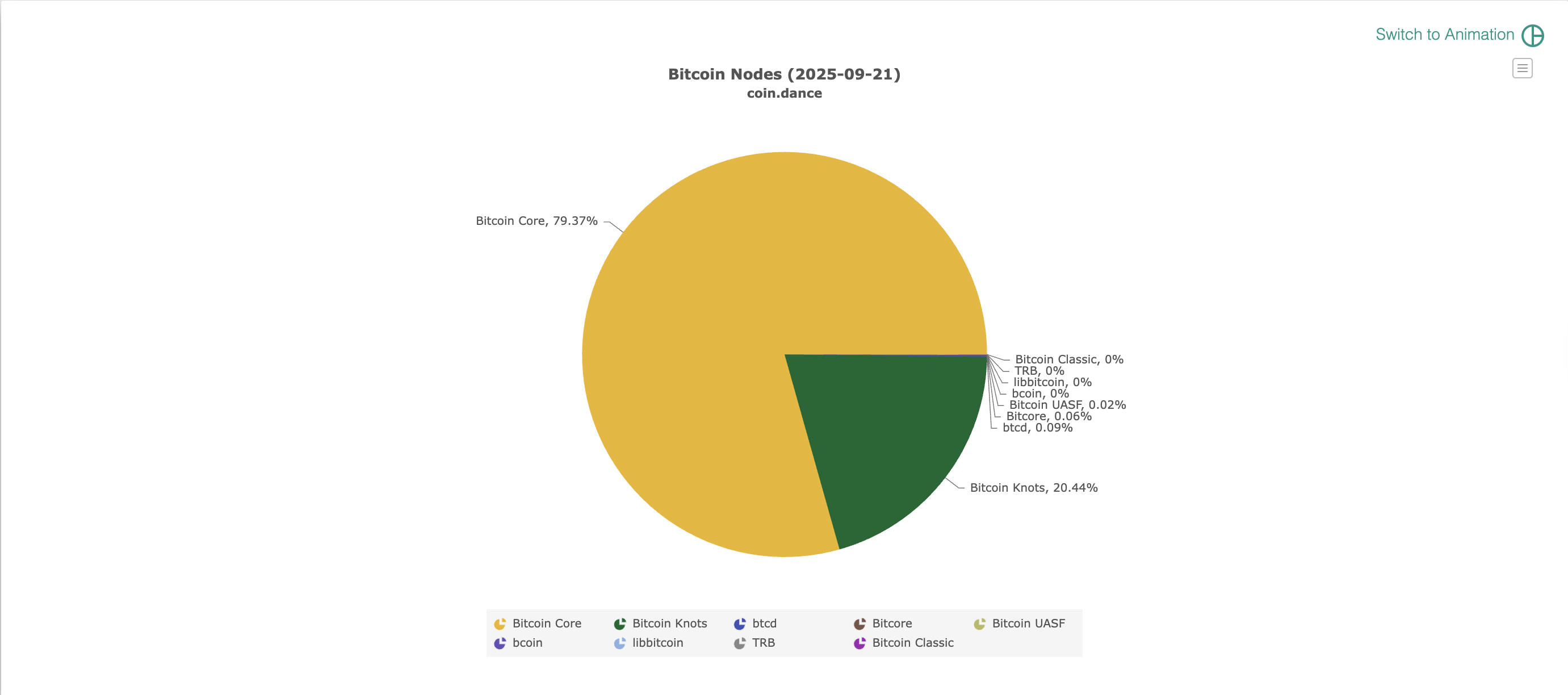
Knots allows node runners to enforce strict data size limits, which proponents argue is necessary to preserve the decentralization of the Bitcoin protocol.
The Bitcoin ledger has generated about 680 gigabytes of data since the inception of the decentralized protocol in 2009, thanks to the simple architecture of Bitcoin and strict data limits.
Bitcoin’s low data storage requirements allow anyone to run a node on retail computer hardware for as little as $300, democratizing access and ensuring maximum decentralization.
For comparison, higher-throughput blockchain networks and smart contract platforms, which generate far more data, can cost tens of thousands of dollars to run and require specialized commercial hardware, meaning only wealthy investors and large corporations can run nodes and enforce the consensus rules of those protocols.
Robust hardware requirements translate into increased centralization of a blockchain protocol and a heightened risk that a few nodes can collude to alter the consensus rules or reverse transactions.
Magazine: Bitcoin’s long-term security budget problem: Impending crisis or FUD?