

Not for syndication. This article cannot be republished without the express permission of Business Expert Press (BEP).
The following is adapted from the forthcoming Markets in Chaos: A History of Market Crises around the World by Brendan Hughes, CFA.
I am concerned about the long-term health of the US dollar along with just about every other fiat currency in the world. Why? Because of the low interest rates, artificially inflated asset valuations, and soaring debt levels that followed the global financial crisis (GFC).
How much has monetary policy changed since the GFC? In The Lords of Easy Money: How the Federal Reserve Broke the American Economy, Christopher Leonard observes that between 2007 and 2017 the US Federal Reserve printed more money than was printed over the previous 500 years. And this was before such efforts accelerated following the outbreak of COVID-19 to address weak economic growth and high unemployment. As we have seen, printing more money does not increase prosperity but inevitably makes money less valuable through higher inflation.
This grand monetary experiment has undermined the global financial system and necessitates a radical solution.
The United States cannot simply grow its way out of its current deficit levels. Higher taxes and budget cuts are among the only remaining tools available to policymakers, and while the former could raise federal income in the short term, it would likely reduce economic growth in the long term. Substantial and sustained budget cuts, meanwhile, are almost always unpopular, and politicians have little incentive to make them. After all, the negative effects of such measures are felt fairly immediately, while running up deficits only stings many years later, usually long after the politicians responsible have left the scene.
But if the United States fails to control its deficits, the US dollar may lose its status as the world’s reserve currency. Some nations are already trying to reduce their dependence on the dollar. Reserve currencies rise and fall as part of long-term cycles, and every reserve currency runs the risk of ceasing to be one.
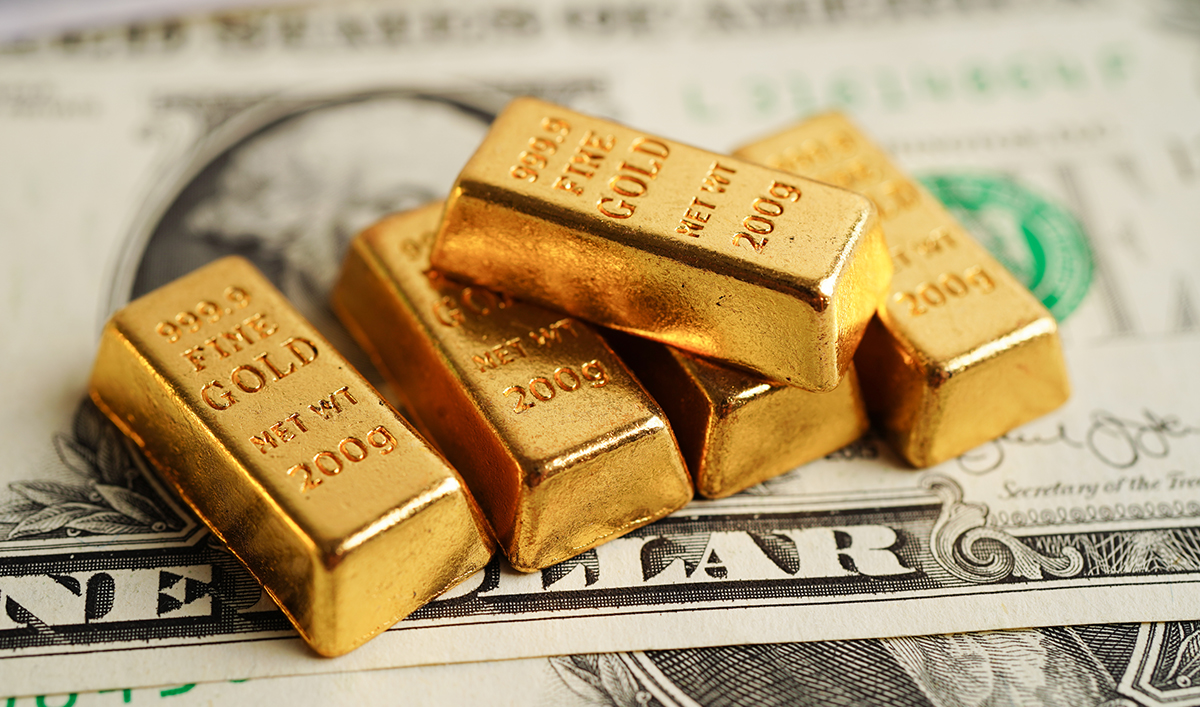
For these reasons, I believe we have to return to the gold standard in some form. President Richard Nixon ended the previous gold standard era in 1971 when he eliminated the fixed convertibility between the US dollar and gold and made the dollar a fiat currency. While a country that issues fiat currency is unlikely to ever default on its debts, it can and often will print so much money that the currency becomes worthless. When this happens, the link between paper money and gold or other hard assets is often restored. Today, looming debt restructurings and potential defaults may soon lead to such a global monetary reset.
Not only do I advocate for a return to the gold standard; I believe, as Milton Friedman did, that central banks should tie the growth of the money supply to GDP growth. Over the years, Keynesians have noted, correctly, that limits on money supply growth do not always impact the velocity of money. But when the money supply increases well in excess of GDP growth, it does destabilize the financial system.

“Where is the understanding of history and the common sense about the quantity of money and credit and the amount of inflation?” — Ray Dalio
To be sure, Friedman’s monetarism is not immune to criticism. How to define money supply — M1 vs. M2, for example — has never been clearcut. The rise of the shadow banking system and cryptocurrencies has not made the job any easier. Nevertheless, that money supply growth should mirror economic growth makes intuitive sense. When more money competes for the same goods and services, that money becomes less valuable. There is no benefit to printing massive piles of paper money in excess of GDP growth or incentivizing private banks to do so through fractional reserve banking and government bailouts. Fed chair Jerome Powell may downplay the correlation between money supply growth and inflation, but printing so much money in 2020, long after conditions had stabilized, was a policy mistake.
That is why I believe a partial gold standard should be supplemented by tying money supply growth to GDP growth and introducing a full-reserve banking system. In 1933, a group of economists proposed such a full-reserve banking system as part of the so-called Chicago plan. They believed the fractional-reserve banking system still in use today bore responsibility for the Great Depression. But under a full-reserve system, with a 1:1 ratio of loans to reserves, every dollar in loans is backed by a dollar in deposits. A monetary system constructed along these lines would dramatically reduce the potential for extreme boom-and-bust cycles.
We may never fully understand COVID-19’s effect on the domestic and global economy or of the aggressive monetary and fiscal measures taken in response. But it will almost certainly be much more difficult for the United States to reduce government debt today than in the post-World War II period. Between 1945 and 1959, the US government slashed its debt-to-GDP ratio by more than half, to roughly 50%, thanks largely to rapid economic growth and a population boom. US GDP increased from $228 billion in 1945 to almost $1.7 trillion in 1975. Today, not even the most bullish scenario anticipates economic growth anywhere near those levels in the years ahead. As for the population, without profound changes to immigration policy, given the low domestic birth rate, the United States will not expand fast enough to fuel the necessary economic growth.
To make matters worse, Social Security and Medicare spending constituted 61% of federal spending in 2019 compared with approximately 30% in 1970. The United States has three options: It can raise taxes in the coming years to pay for the national debt and entitlement spending, restructure or default on the debt, or continue to print large sums of money. As I see it, the first option is highly likely. The second is highly unlikely given the country’s status as a fiat currency issuer. That means the third option is pretty much inevitable. But given where the United States stands today, higher taxes and additional money printing will only devalue the US dollar further.

Expanding global debt levels and the potential decline of fiat currencies increase the possibility that US Treasuries and other government debt instruments will be devalued or reduced to zero. For most living today, such a concept may seem impossible. But Ray Dalio offers some helpful historical context:
“While people tend to believe that a currency is pretty much a permanent thing and that ‘cash’ is the safest asset to hold, that’s not true. All currencies devalue or die, and when they do, cash and bonds (which are promises to receive currency) are devalued or wiped out. That is because printing a lot of currency and devaluing debt is the most expedient way of reducing or wiping out debt burdens.”
Those of us in the United States and other developed countries have only ever known government debt to be stable. Too many retirees have 80% of their total asset base parked in a single government’s debt under the false belief that it will never lose value. But we should not mistake low price volatility for the absence of risk. Such a line of thinking is dangerous and ignores the history of government debt around the world. We also need to recognize that fiscal and monetary policy since the GFC and especially post COVID-19 have only made devaluation more likely.
“Of the roughly 750 currencies that have existed since 1700, only about 20 percent remain,” Dalio observes. A new monetary system along the lines I describe would help ensure the dollar remains in that 20%.
For more from Brendan Hughes, CFA, check out Markets in Chaos: A History of Market Crises around the World.
If you liked this post, don’t forget to subscribe to the Enterprising Investor.
All posts are the opinion of the author. As such, they should not be construed as investment advice, nor do the opinions expressed necessarily reflect the views of CFA Institute or the author’s employer.
Image credit: ©Getty Images / manassanant pamai
Professional Learning for CFA Institute Members
CFA Institute members are empowered to self-determine and self-report professional learning (PL) credits earned, including content on Enterprising Investor. Members can record credits easily using their online PL tracker.