
Business Insights
  • Home
  • Crypto
  • Finance Expert
  • Business
  • Invest News
  • Investing
  • Trading
  • Forex
  • Videos
  • Economy
  • Tech
  • Contact

Archives

  • April 2026
  • March 2026
  • February 2026
  • January 2026
  • December 2025
  • November 2025
  • October 2025
  • September 2025
  • August 2025
  • July 2025
  • June 2025
  • May 2025
  • April 2025
  • March 2025
  • February 2025
  • January 2025
  • December 2024
  • November 2024
  • October 2024
  • September 2024
  • August 2024
  • July 2024
  • June 2024
  • May 2024
  • April 2024
  • March 2024
  • February 2024
  • August 2023
  • January 2023
  • December 2021
  • July 2021
  • November 2019
  • October 2019
  • September 2019
  • August 2019
  • July 2019
  • June 2019
  • May 2019
  • April 2019
  • March 2019
  • February 2019
  • January 2019

Categories

  • Business
  • Crypto
  • Economy
  • Finance Expert
  • Forex
  • Invest News
  • Investing
  • Tech
  • Trading
  • Uncategorized
  • Videos
Apply Loan
Money Visa
Advertise Us
Money Visa
  • Home
  • Crypto
  • Finance Expert
  • Business
  • Invest News
  • Investing
  • Trading
  • Forex
  • Videos
  • Economy
  • Tech
  • Contact
EU-US Trade Deal: A Damage Limitation Success
  • Economy

EU-US Trade Deal: A Damage Limitation Success

  • July 28, 2025
  • Roubens Andy King
Total
0
Shares
0
0
0
Total
0
Shares
Share 0
Tweet 0
Pin it 0

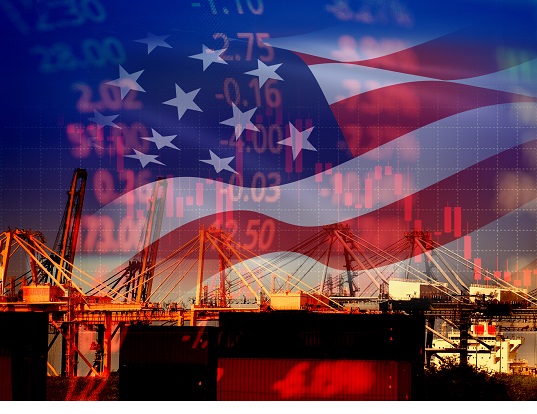
Presidents Trump and Von der Leyen announced yesterday from Scotland that a trade agreement had been reached. Is it a good deal? Political commentators and many editorialists mostly say no. The stock market reaction says yes. Our take: the deal is at the better end of the spectrum of what could realistically be achieved. Importantly, it removes the risk of a trade war escalation in the world’s largest trade relationship, and creates a more predictable environment for firms on both sides of the Atlantic to operate in.

Commentators have been talking of surrender or even outright defeat. This is a misreading of the situation. The deal negotiated by the EU has better terms (see Box) than all negotiated so far by countries with a trade surplus with the US. It contained economic damage rather than expanding it. And it conceded nothing that cannot be alleviated by ongoing domestic policy improvements. Given the imbalance created by EU’s continued critical dependency on the US security umbrella, that’s nothing to apologise for.

***

This was not a classic trade negotiation where the parties seek to expand trade between each other via balanced lowering of trade barriers, even though the European Commission initially envisionned it as such. It was an exercise in resisting regulatory coercion and limiting economic damage in a context where the US had made the unilateral and sovereign policy decision to replace revenue from domestic taxes by taxes on imports.

Let's not forget that President Trump kicked off the negotiations arguing the EU's VAT was a tariff that needed to be dropped off and significantly reduced, and that its tech regulations and digital services taxes were also unacceptable. Ditto for a large number of EU phytosanitary and other safety regulations acting as powerful non-tariff barriers. The EU held firm and made no concessions in these areas.

As to economic damage, most economic modelling of the impact of US tariffs makes clear that 1) the biggest negative impact, particularly in the short term, comes from uncertainty; and 2) GDP growth (of both parties) is more adversely impacted in case of retaliation. Embarking on a prolonged standoff would have been triply harmful to the EU economy:

– by prolonging uncertainty,

– by leading to an even higher level of tariffs while negotiations continued, putting Europe at a disadvantage over other exporters to the US, i.e. at risk of losing market share of a likely shrinking pie.

– by raising the costs of the goods and services that the EU imports from the US and would have been tariffed in the event of a standoff, thereby potentially strengthening the hand of the hawks on the ECB's Governing Council instead of allowing it to deliver a more supportive stance.

Despite this not being a classic “barrier-lowering” trade negotiation, the EU still secured “zero for zero” tariff reductions in a meaningful list of sectors (indeed airplanes and components are among the top traded goods between the US and EU). No other trade deal having reached so far contains similar provisions on this scale.

Getting a deal over the line allows all EU economic agents to move on safely in the knowledge that a broader trade war (that could have expanded to services) has been averted. It also allows EU policymakers to refocus fully on the domestic (both national and intra-EU) reform agenda that will matter so much more to EU growth in the medium to long term.

The deal is still undoubtedly a negative shock compared to the tariff level that prevailed at the start of the year (with the effective tariff rate roughly multiplied by 10), but with exports to the US being less than 3% of EU GDP, it will be a manageable one. Importantly, the 15% cap on sectoral tariffs protects the few economies for which sectors subject to specific “section 232” tariffs at much higher level would have been very impactful (see chart). And it has turbo-charged the EU's efforts to negotiate trade deals with new counterparts, which will benefit the EU's economy over the medium to long term.

Exports to the US

Key Terms (based on announcements on July 27)

  • Single 15% tariff rate across for vast majority of EU exports products, including cars, pharmaceuticals, semiconductors; 15% is a ceiling, no stacking, all inclusive (ie, includes pre-existing tariffs).
  • ”Zero for zero” tariffs on a number of strategic products including aircrafts and components; certain chemicals, certain generics, semiconductor equipments, and certain agricultural products, natural resources and critical raw materials. Work will continue to add more products to this list. No unilateral tariff reduction.
  • On steel and aluminium, the two sides will work together to reduce global overcapacity (ie, put pressure on China). Tariffs will be cut and a quota system put in place.
  • Non tariff EU commitments: EU will replace Russian gas and oil by significant purchases of US LNG and nuclear fuels (to the tune of $250 / year over the next 3 years); the EU will purchase US AI chips and significant amounts of US military equipment. EU will invest an extra $600 bn in the US over the next 3 years (EU FDI flows to the US amounted to $200bn in 2024).

Article completed on 28 July 2025

Total
0
Shares
Share 0
Tweet 0
Pin it 0
Roubens Andy King

Previous Article
breakout or rejection at ,000?
  • Forex

breakout or rejection at $4,000?

  • July 28, 2025
  • Roubens Andy King
Read More
Next Article
Marvel superstar Robert Downey Jr sparks new Avengers: Doomsday fan theory over possible dual role in the MCU movie, and I hope it’s not true
  • Tech

Marvel superstar Robert Downey Jr sparks new Avengers: Doomsday fan theory over possible dual role in the MCU movie, and I hope it’s not true

  • July 28, 2025
  • Roubens Andy King
Read More
You May Also Like
Using global shocks as a laboratory to study executive pay
Read More
  • Economy

Using global shocks as a laboratory to study executive pay

  • Roubens Andy King
  • April 25, 2026
Challenging inequalities: How we got stuck and where we go next
Read More
  • Economy

Challenging inequalities: How we got stuck and where we go next

  • Roubens Andy King
  • April 24, 2026
Federal Reserve Board – Federal Reserve Board announces approval of application by OceanFirst Financial Corp.
Read More
  • Economy

Federal Reserve Board – Federal Reserve Board announces approval of application by OceanFirst Financial Corp.

  • Roubens Andy King
  • April 24, 2026
Federal Reserve Board – Federal Reserve Board announces approval of application by Banco de Credito del Peru
Read More
  • Economy

Federal Reserve Board – Federal Reserve Board announces approval of application by Banco de Credito del Peru

  • Roubens Andy King
  • April 24, 2026
“Us versus them”: How political propaganda polarises beliefs without providing any news
Read More
  • Economy

“Us versus them”: How political propaganda polarises beliefs without providing any news

  • Roubens Andy King
  • April 23, 2026
How a nation was born: Lessons from four centuries of Brazilian growth
Read More
  • Economy

How a nation was born: Lessons from four centuries of Brazilian growth

  • Roubens Andy King
  • April 23, 2026
Federal Reserve Board – Agencies finalize changes to enhance community bank leverage ratio
Read More
  • Economy

Federal Reserve Board – Agencies finalize changes to enhance community bank leverage ratio

  • Roubens Andy King
  • April 23, 2026
Cost-effective freshwater biodiversity impact reporting for banks: Evidence from pollution exposure near protected areas
Read More
  • Economy

Cost-effective freshwater biodiversity impact reporting for banks: Evidence from pollution exposure near protected areas

  • Roubens Andy King
  • April 22, 2026

Recent Posts

  • No F*cking Way | Financial Audit
  • Using global shocks as a laboratory to study executive pay
  • Invest in yourself.| Brian Tracy | #shorts #youtubeshorts #success #motivation #productivity
  • Challenging inequalities: How we got stuck and where we go next
  • Federal Reserve Board – Federal Reserve Board announces approval of application by OceanFirst Financial Corp.
Featured Posts
  • No F*cking Way | Financial Audit 1
    No F*cking Way | Financial Audit
    • April 25, 2026
  • Using global shocks as a laboratory to study executive pay 2
    Using global shocks as a laboratory to study executive pay
    • April 25, 2026
  • Invest in yourself.| Brian Tracy | #shorts #youtubeshorts #success #motivation #productivity 3
    Invest in yourself.| Brian Tracy | #shorts #youtubeshorts #success #motivation #productivity
    • April 24, 2026
  • Challenging inequalities: How we got stuck and where we go next 4
    Challenging inequalities: How we got stuck and where we go next
    • April 24, 2026
  • Federal Reserve Board – Federal Reserve Board announces approval of application by OceanFirst Financial Corp. 5
    Federal Reserve Board – Federal Reserve Board announces approval of application by OceanFirst Financial Corp.
    • April 24, 2026
Recent Posts
  • Federal Reserve Board – Federal Reserve Board announces approval of application by Banco de Credito del Peru
    Federal Reserve Board – Federal Reserve Board announces approval of application by Banco de Credito del Peru
    • April 24, 2026
  • “Us versus them”: How political propaganda polarises beliefs without providing any news
    “Us versus them”: How political propaganda polarises beliefs without providing any news
    • April 23, 2026
  • CEO Blueprint : Anupam Mittal’s Masterclass on How to Find Gap in the Market?
    CEO Blueprint : Anupam Mittal’s Masterclass on How to Find Gap in the Market?
    • April 23, 2026
Categories
  • Business (2,057)
  • Crypto (2,023)
  • Economy (258)
  • Finance Expert (1,687)
  • Forex (2,016)
  • Invest News (2,464)
  • Investing (2,040)
  • Tech (2,056)
  • Trading (2,024)
  • Uncategorized (2)
  • Videos (1,042)

Subscribe

Subscribe now to our newsletter

Money Visa
  • Privacy Policy
  • DMCA
  • Terms of Use
Money & Invest Advices

Input your search keywords and press Enter.