
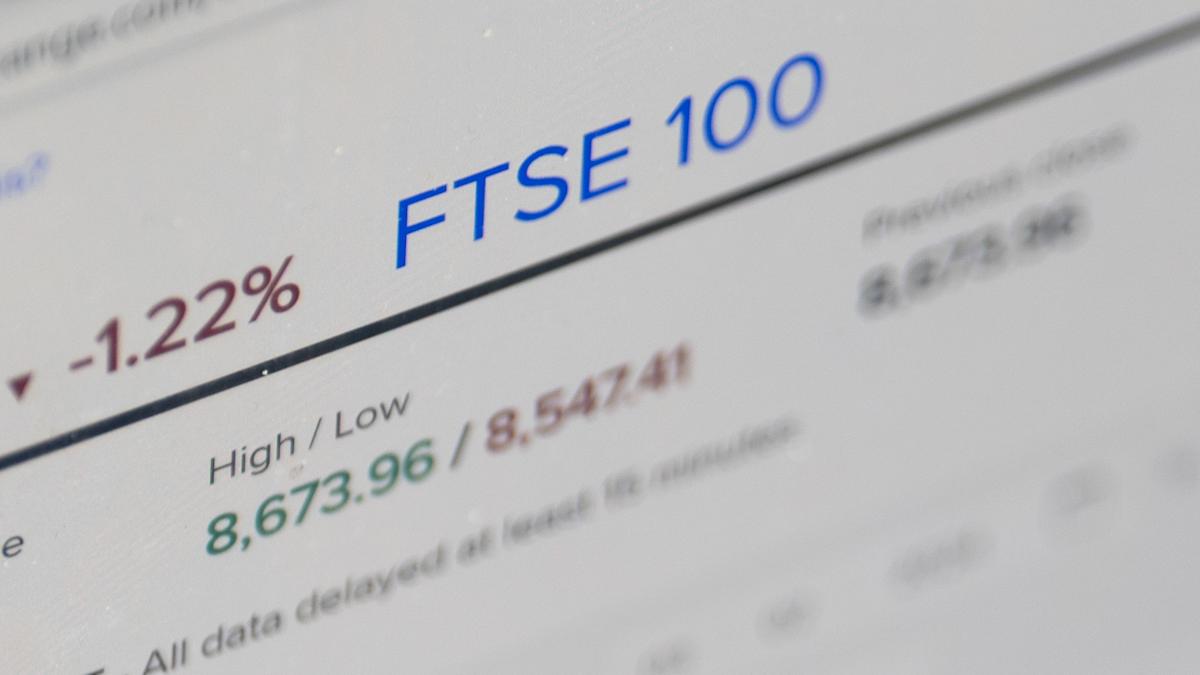

European stocks struggled on Monday despite fresh gains on Wall Street which saw the S&P 500 notch another all-time best level.
The FTSE 100 index closed down 37.95 points, 0.4%, at 8,760.96. The FTSE 250 was 89.70 points lower, 0.4%, at 21,626.26, while the AIM All-Share added 1.32 points, 0.2%, at 770.65.
In European equities on Monday, the Cac 40 in Paris fell 0.2%, while the Dax 40 in Frankfurt declined 0.5%.
The yield on the US 10-year Treasury was quoted at 4.27%, unchanged from Friday. The yield on the US 30-year Treasury was quoted at 4.82%, flat from Friday.
In New York, the Dow Jones Industrial Average was up 0.4%, the S&P 500 was 0.2% higher and the Nasdaq Composite climbed 0.1%.
“This week brings a slew of key US data, as well as the Friday deadline for passage of the fiscal bill. The July 9 end of the tariff pause is approaching and should bring lots of trade headlines this week, both good and bad. If nothing else, we should expect heightened volatility across most global markets,” analysts at Brown Brothers Harriman said.
US senators began voting on President Donald Trump’s flagship spending bill.
Mr Trump wants what he calls the “One Big Beautiful Bill” to extend his expiring first-term tax cuts at a cost of 4.5 trillion dollars to the budget, boost military spending and fund his plans for unprecedented mass deportations and border security.
The pound was broadly flat against the dollar at 1.37 at the time of the London equities close on Monday. The euro stood at 1.17 against the dollar, the same as Friday.
Eurozone CPI figures are due for release on Tuesday.
Ahead of that, provisional figures showed German inflation slowed slightly in June, with softer energy and food costs helping to offset continued service-sector price pressure.
The consumer price index rose 2.0% year-on-year in June, easing from 2.1% in May, according to Destatis.
Prices were flat on the month, below the 0.2% rise expected by the FXStreet-cited consensus.
Annual core inflation, which excludes food and energy, stood at 2.7%, also cooling slightly from May’s 2.8% reading.
Back in the UK, gross domestic product grew as expected during the first quarter of 2025, according to data from the Office for National Statistics.
Real GDP is estimated to have increased by 0.7% between January and March, in line with the ONS’s first estimate. This is accelerated from a 0.1% growth in the prior quarter.
On-year, real GDP is estimated to have increased by an unrevised 1.3%, also in line with the first estimate.