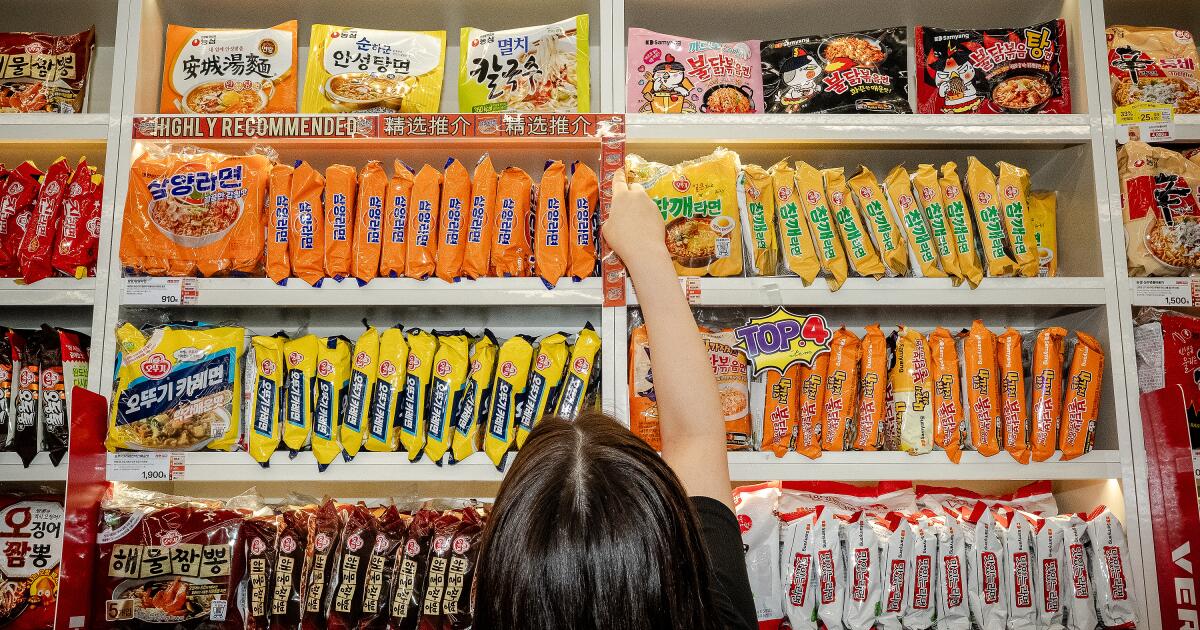

SEOUL — In many parts of the world, convenience stores are the shops of last resort: cigarettes, sodas and laundry detergent. But in South Korea, you might find single malt whiskies, $800 French wines, 24K gold bars, shampoo and conditioner refill stations, televisions or a dine-in instant noodle bar with more than 200 varieties of ramyon.
A customer might be able to pick up a package, wash and dry their clothes, or sign up for a new debit card.
The stores are best known for their numerous feats of “instant-izing” food, a process in which nearly every conceivable dish is turned into a packaged meal: spaghetti, Japanese udon, fried rice that you squeeze out of a tube. These have turned convenience stores into a $25-billion industry in South Korea and those food products are churned out at a staggering pace: up to 70 new food items hit the shelves each week, effectively offering a live feed of South Korean tastes.
“In South Korea’s food retail market, you go extinct if you’re not quick to change,” says Chae Da-in, who says her obsession with convenience stores is decades old. “It’s all about being diverse and fast.”
Known in the national media and on social media as a “convenience store critic,” Chae is the author of three books on the world of convenience store foods, which has led to TV appearances and newspaper interviews.
Every Friday, she tours a handful of convenience stores near her home to keep up with what’s new. Over the last two decades, she estimates she has consumed at least 800 varieties of convenience store samgak gimbap — rice wrapped in dried seaweed and a grab-and-go staple.
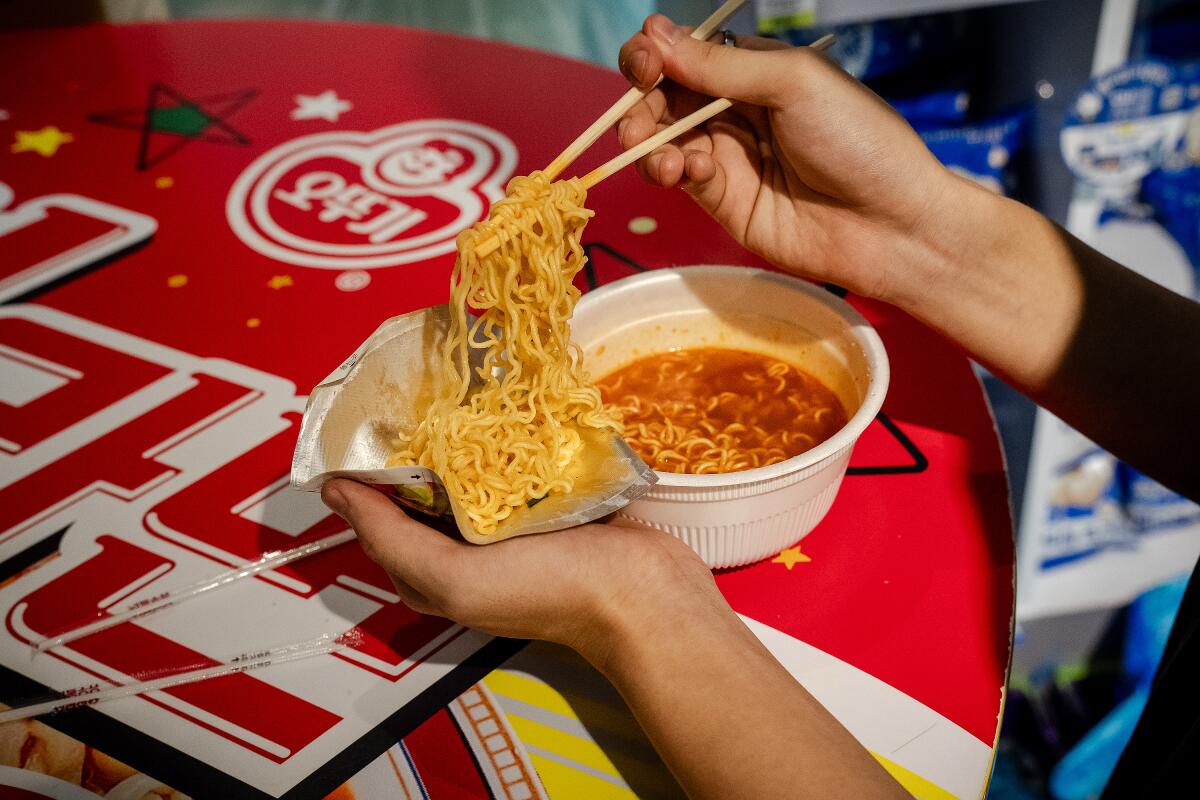
Lee Hee Chul, 21, from Incheon, South Korea, cools down his ramyon in a DIY cone made from the ramyon bowl cover at a CU convenience store in a popular tourist area in Myeongdong. (Tina Hsu / For The Times)
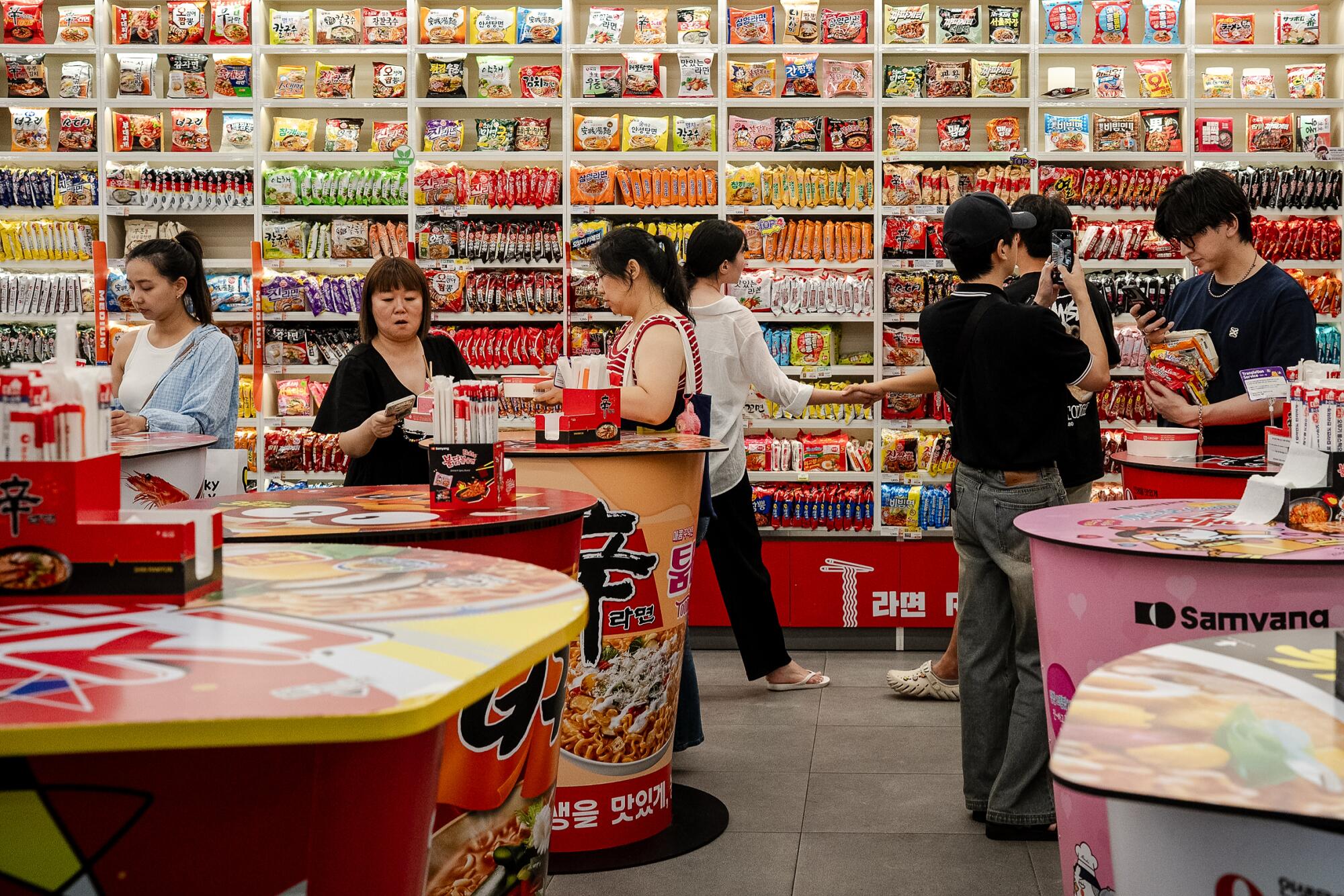
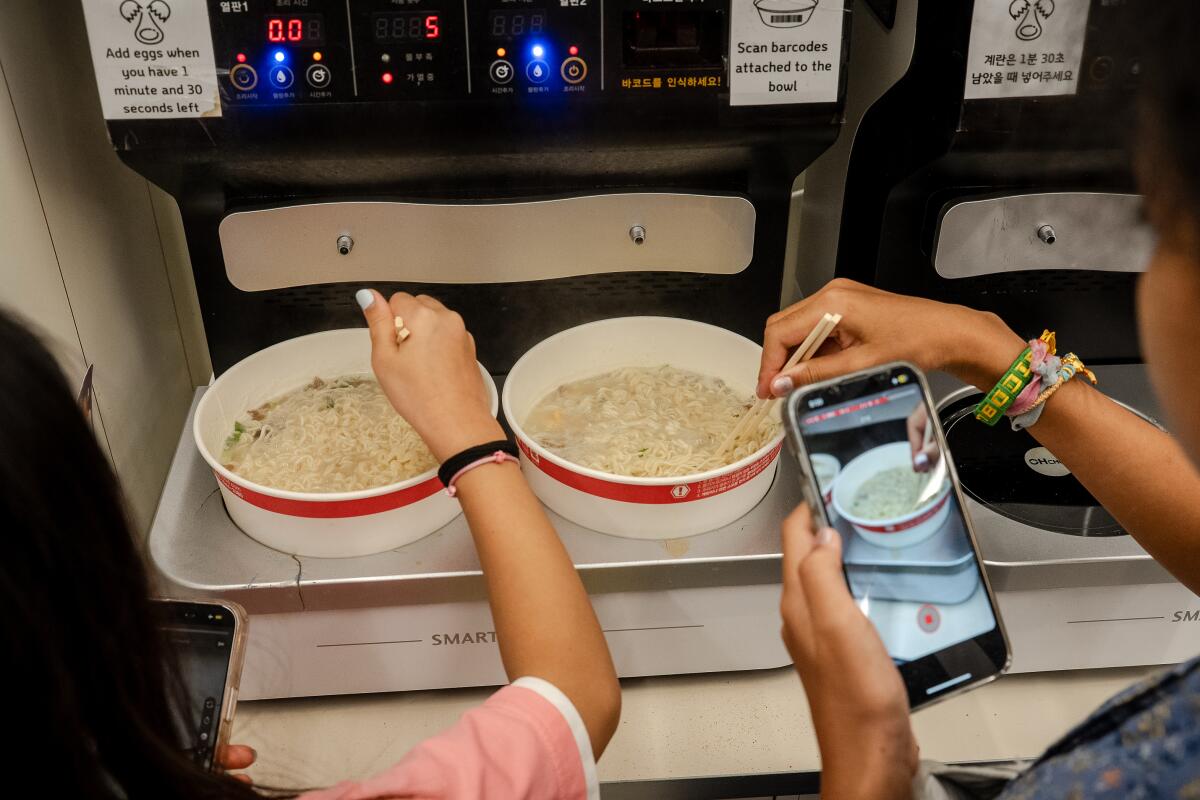
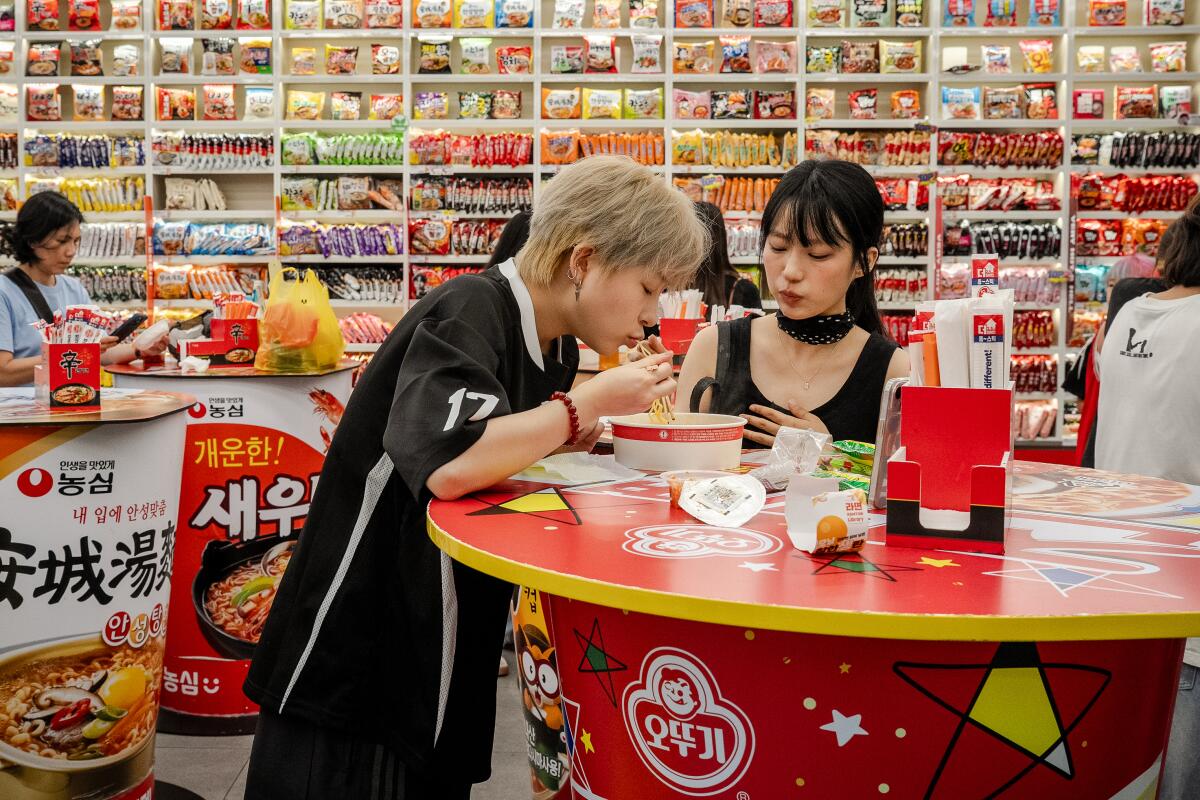
Shoppers prepare their dinner at one of the self-serve machines in the dining area at a CU ramyon convenience store.
In recent years, Chae has watched her obsession go global. Much like South Korean movies, TV shows and music, South Korean convenience stores have become a cultural sensation.
Specific locations, such as the store that appeared in Netflix’s hit series “Squid Game,” have made the news. On TikTok and YouTube, mukbang — videos of people eating — of South Korean convenience store foods have gathered millions of views.
“Giant cheese sausage,” announces one reviewer in a TikTok video series titled “ONLY Eating Food from a Korean Convenience Store.” The meal also includes blue lemonade that comes in a plastic pouch, a “3XL” spicy tuna mayo samgak gimbap and a carbonara-flavored Buldak (“fire chicken”) noodle cup.
South Korean convenience stores are now expanding into nearby countries such as Mongolia or Malaysia. CU, one of the country’s leading operators with more than 600 stores in Asia, is set to open its first U.S. location in Hawaii later this year.
“The percentage of the Asian population in Hawaii is six times that of the mainland U.S., making it a place where there is a high level of familiarity and positive attitudes toward Korean culture,” said Lim Hyung-geun, the head of overseas operations at BGF Retail, CU’s parent company.
“On top of that, we’re seeing the sustained popularity of Korean culture, such as a Korean food boom among American teenagers and young people in their 20s and 30s, which we believe will be a big boost for CU’s future expansion.”
Lim calls CU’s overseas locations “‘miniature South Koreas’ where people can experience the products that have become popular with the K-wave.
“But as is the case here, K-convenience stores aren’t just a place to experience South Korean culture,” he said. “They are also restaurants, cafes and a general amenity.”
In other words, everything stores that are everywhere and open all the time.
***
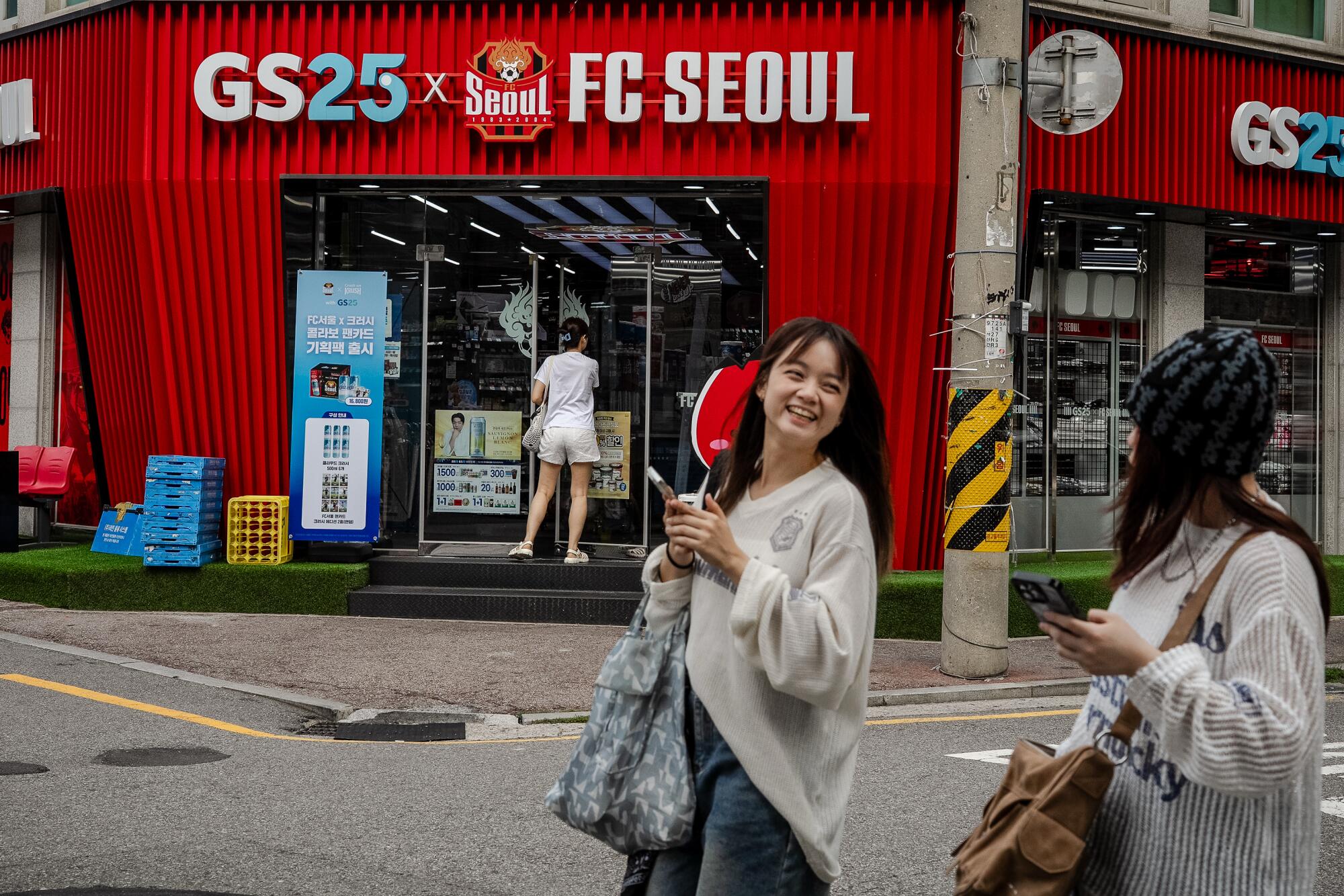
The GS25 convenience store is collaborating with FC Seoul, a South Korean football club, in the Hongdae neighborhood.
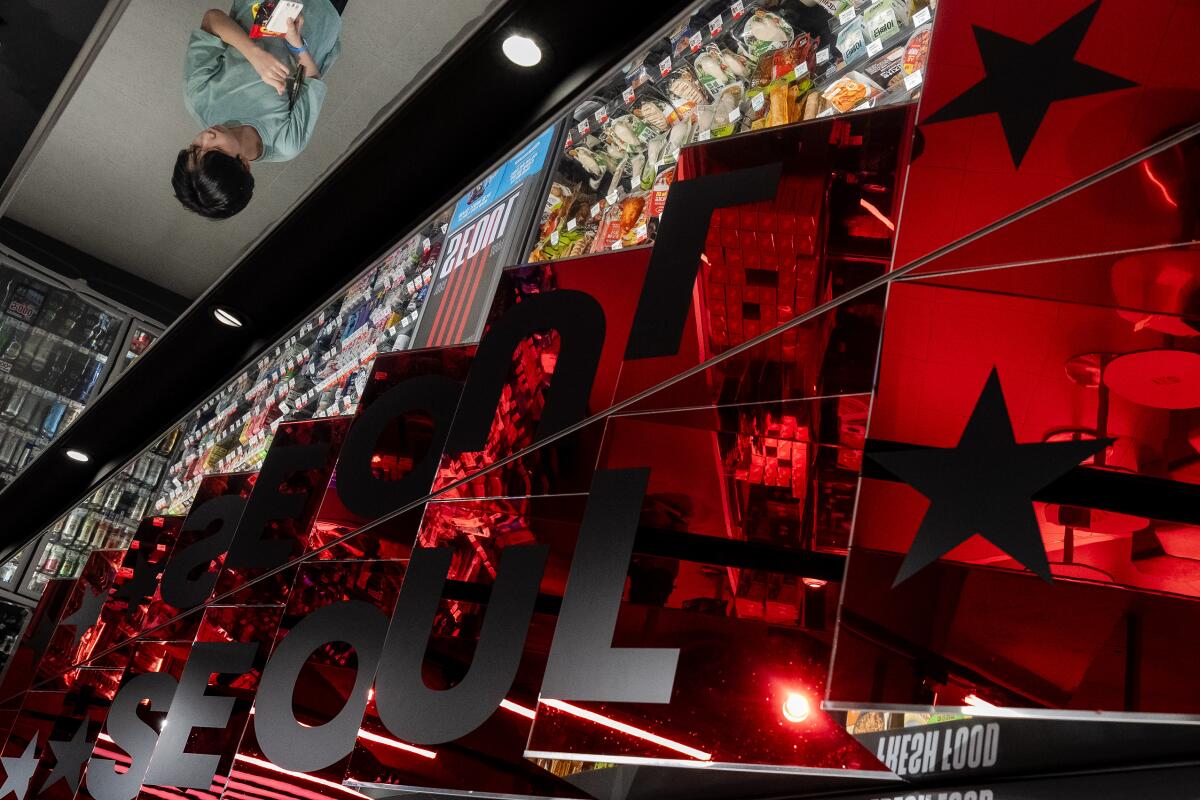
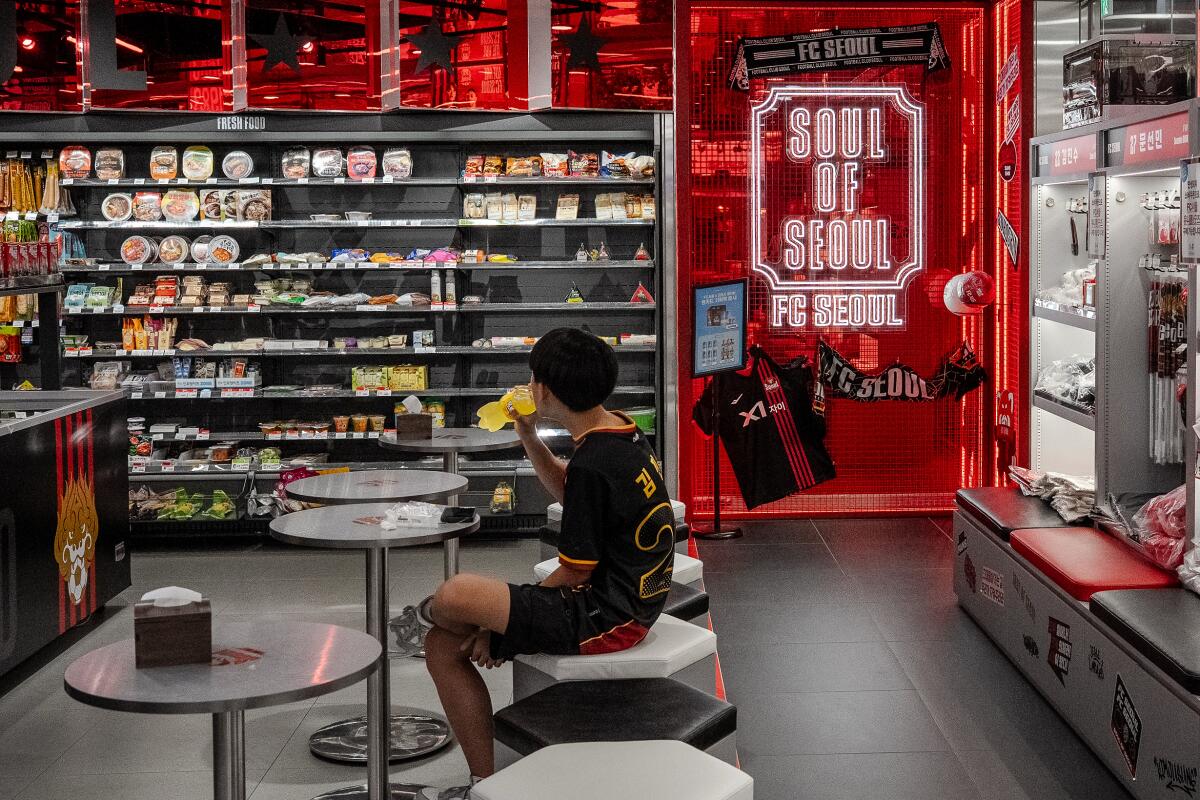
Like many things South Korea has embraced and spun off into something novel, convenience stores are an import to the country. The first such store was American — the Southland Ice Co., which was founded in Texas in 1927 and changed its name to 7-Eleven in 1946. The first of the 7-Elevens opened for business in Seoul in the 1980s.
Today, South Korea is the convenience store capital of the world. Like the bodegas of New York, they have become part of the fabric of contemporary urban life, multifunctional spaces that can be restaurants or coffee shops or bars with microwaves and outdoor seating. Chae calls them the “oasis of the streets.”
“People hang out in convenience stores,” she said. “They’ve become a social place.”
Part of what makes them such a force in the country is their sheer numbers.
There are around 55,000 convenience stores in South Korea — a country the size of Indiana — amounting to one convenience store for every 940 people. In Seoul, where their numbers have quadrupled in the last 15 years, it sometimes feels like there’s one on every corner.
Much of this has to do with the fact that roughly one in every four workers in South Korea is self-employed, a high number relative to other developed countries. For those in this mom-and-pop economy, which includes older workers pushed into early retirement or others who have been boxed out of the traditional labor market, convenience stores offer the most accessible form of entrepreneurship.
“Compared to the hundreds of thousands it would cost to open another business, the main draw of convenience stores is that you can open one with starting capital as little as 20 million won [$14,000],” said Oh Sang-bong, the head of social policy research at the Korean Labor Institute. “Of course it’s not easy. There are a lot of cautionary tales. But there are success stories, too.”
***
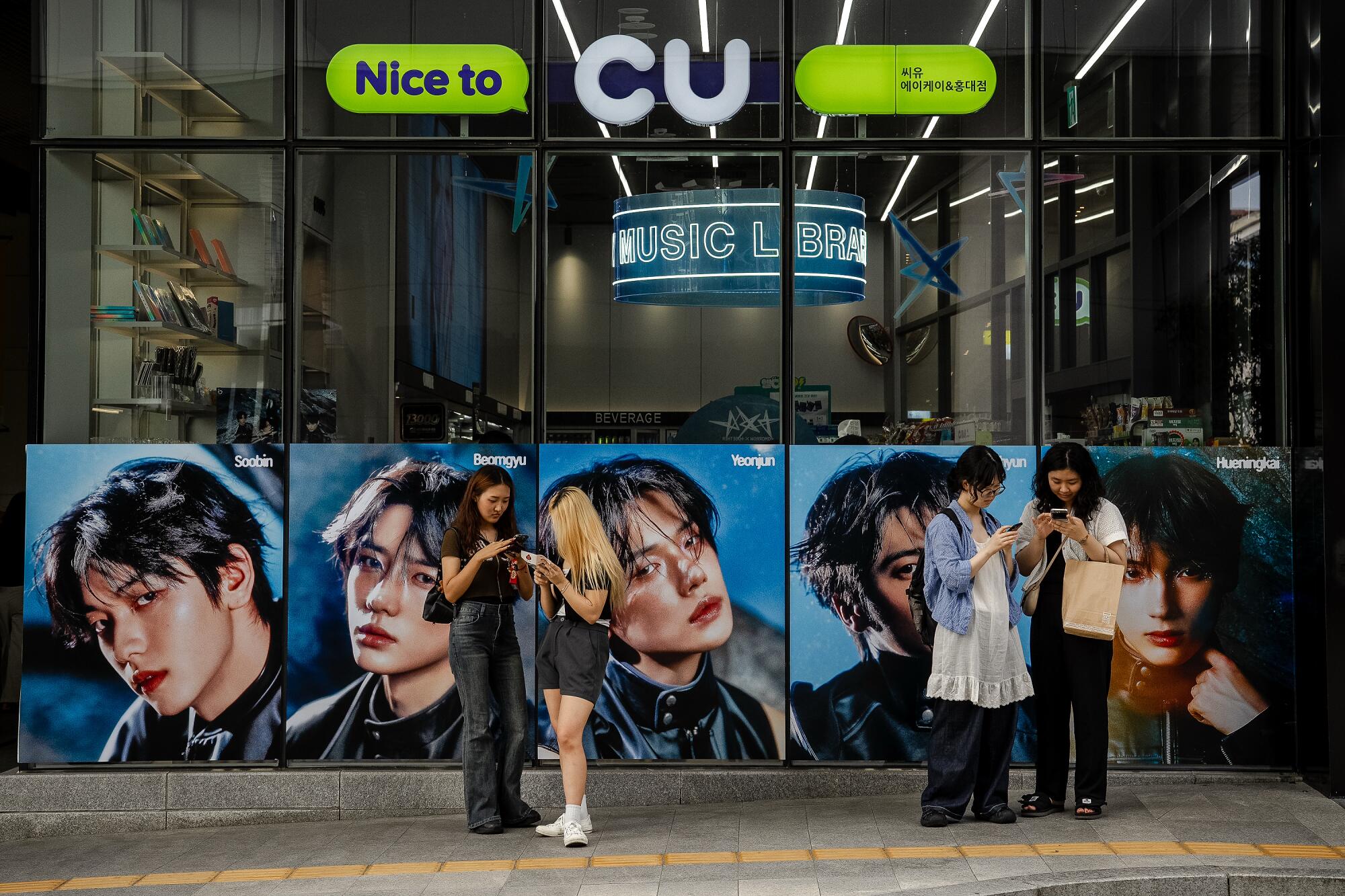
Images of the boy band Tomorrow X Together decorate the windows of the Nice to CU music library convenience store in the Hongdae neighborhood of Seoul.
This profusion has made the convenience store business one of the most fast-paced and competitive in the country — one that moves in lockstep with boom-and-bust social media attention spans.
Hit products generate the kind of buzz you might see only for a limited-edition sneaker or the latest iPhone, necessitating preorders or, when inventories inevitably dry up, leading to scalping.
But the lows are abrupt. When it was first released last year, CU’s “Dubai-style chocolate” — an in-house take on the global TikTok food trend — commanded lines outside of stores and sold out in a day. Four months later, sales had dropped to a sixth of what they were.
“The lifespan of products is now incredibly short because social media fads come and go so quickly,” said Kim, a merchandiser for a leading convenience store franchise who asked to be identified only by his surname because he is not authorized to speak to the media.
“In the past when the market wasn’t so saturated, revenue would naturally rise as everyone opened more stores. But now there are so many stores, and then you’re competing not just with other convenience stores but with e-commerce platforms, coffee shops, restaurants — everybody who’s following the same trend.”
Most of Kim’s job involves scrolling through social media platforms such as TikTok, looking for the next hot-ticket item, such as a distant food trend that shows signs of making landfall.
“It’s brutal. It’s like trying to find the eye of a needle over and over again,“ he said. “If you miss something big and a competitor releases it first? Then you’re getting chewed out by your boss.”
Kwon Sung-jun is a chef who specializes in Italian cuisine and the winner of “Culinary Class Wars,” a hit reality cooking competition released by Netflix last year. He has a ritual of stopping by a convenience store every night after work — even if he doesn’t have anything to buy.
“It’s very useful for staying abreast of any trends in the culinary world,” he said, and his routine proved to be pivotal in winning the $223,000 prize for “Culinary Class Wars.”
In one stage of the competition, contestants were tasked with cooking a dish using ingredients sourced from a true-to-life replica of a convenience store on set. Kwon, 30, handily won with a chestnut tiramisu whipped together from chestnuts, milk, coffee and a package of biscuits.
“I came up with the idea in 30 seconds,” he said. “Because I had a mental list of what convenience stores have, I also planned substitute options for each of the key ingredients like chestnut, cream and so on.”
Since winning the competition, he has avoided convenience stores; just two weeks after that episode aired, CU released a mass-produced version of his tiramisu, with Kwon’s face on the packaging.
“It’s a little embarrassing to see those photos of myself,” he said.
***
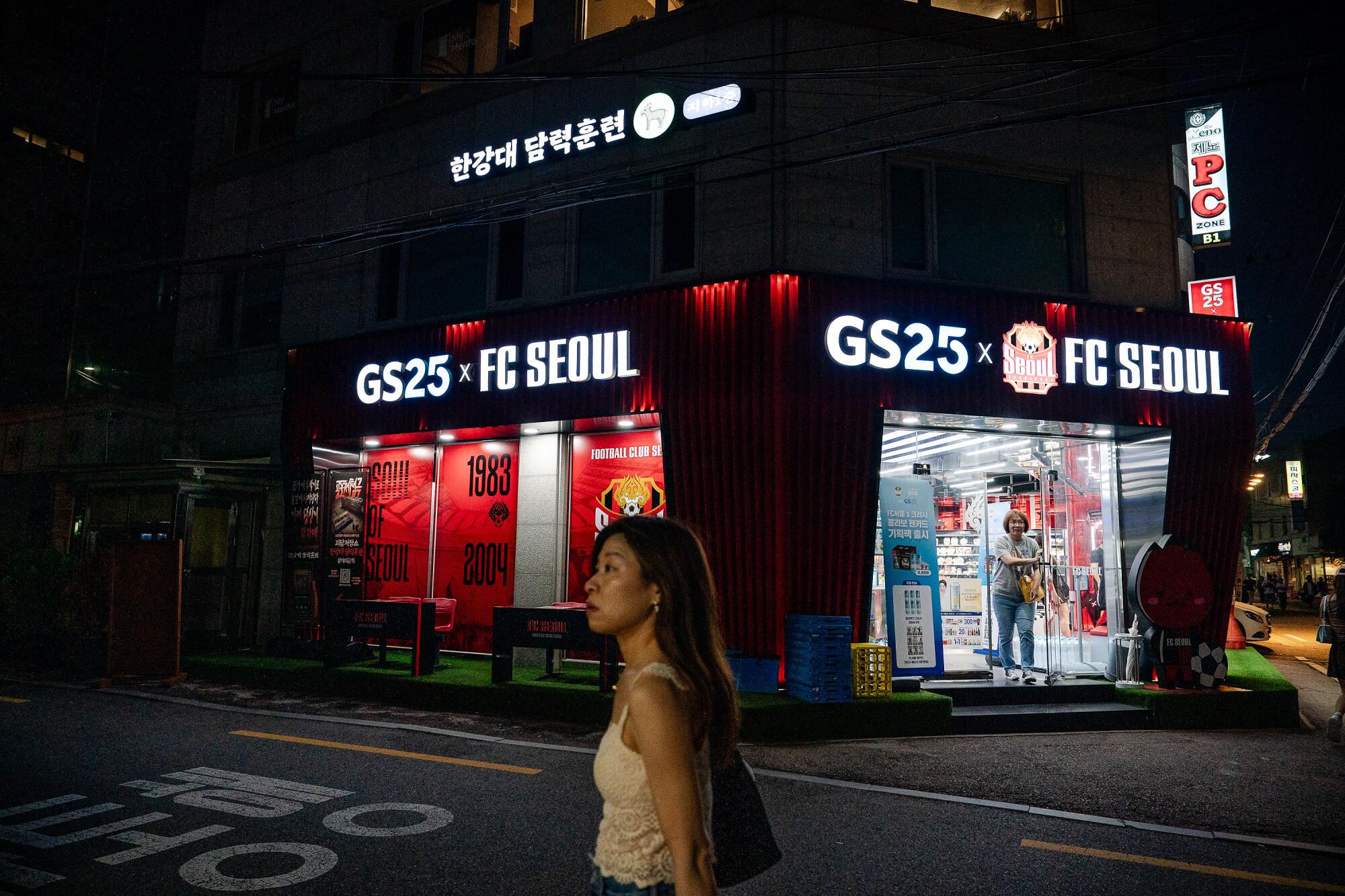
“Most of the tourists come looking for products related to Korean movies or TV shows like dalgona [a traditional Korean candy] because they saw it on ‘Squid Game,’” says Kim Hye-ryeon, the owner of a GS25 in the Hongdae district of Seoul.
All of this makes running a convenience store no easy feat, says Kim Hye-ryeon, the 52-year-old owner of a GS25 in Seoul’s Hongdae district.
Because franchisees are responsible for picking out their own inventory from the company catalog, which is updated three times a week, running a successful convenience store is less about the labor of stocking shelves and cashing out customers than keeping up with the frenetic cycle of food trends.
“Whenever there’s a popular item, the owners who are a step ahead buy up all the stock so sometimes I can’t get any for my store,” she said. “You have to know what’s popular with young people at all times.”
In recent years, as South Korea’s cultural footprint has expanded, the assignment has gotten even more complicated. Streets that were once quiet are now popular thoroughfares for tourists staying in the guesthouses and Airbnbs that have opened in the area. Global tastes must be accounted for, too.
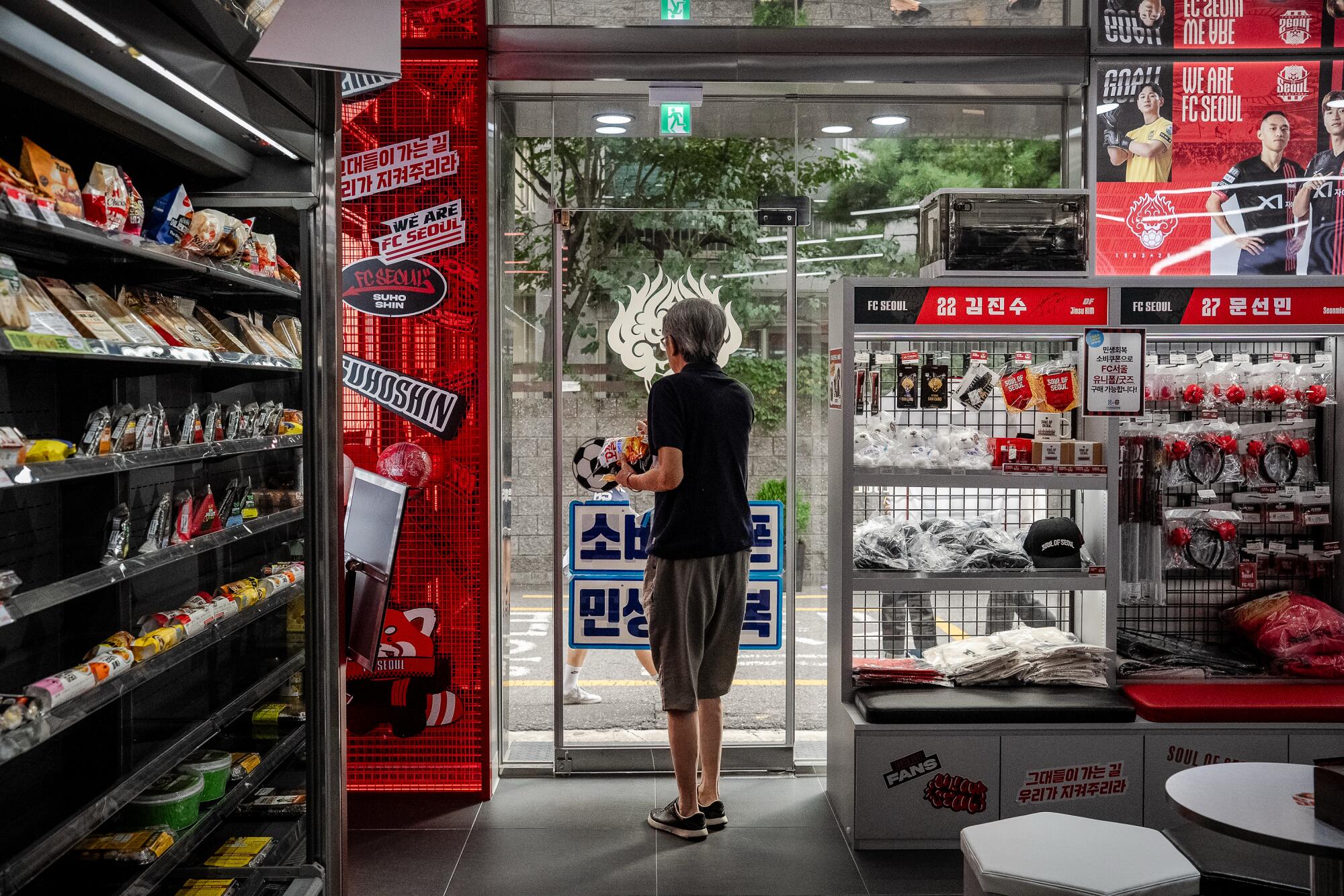
A customer heads for the exit at a GS25 convenience store.
“There’s been a noticeable increase since the pandemic,” she said. “Before, it was mostly Chinese or Japanese tourists, but now it’s from all over, especially Americans and Europeans.”
From behind the counter, she has been keeping mental notes of what this international consumer base is buying, noting, for example, how her Muslim customers carefully study the labels to check whether the item is halal.
“Most of the tourists come looking for products related to Korean movies or TV shows like dalgona [a traditional Korean candy] because they saw it on ‘Squid Game,’” she said. “They also really like ice creams, especially bingsu [Korean shaved ice].”